
Soapstone Countertops vs Granite Quartz Marble: A Guide
The right countertop is not simply the one with the most dramatic veining. It is the surface that fits how your kitchen is used, from setting down a hot pan to cleaning up after a busy family meal. That makes the differences in porosity, heat tolerance, maintenance, and aging worth examining before you choose a slab.
In a comparison of soapstone countertops vs granite quartz marble, soapstone stands out for its non-porous surface and strong resistance to stains and heat. It can also accept hot pans directly without sealing, although it still benefits from occasional mineral oil treatment. Source: Iowa State University Extension.
Granite, quartz, and marble each bring distinct qualities to a home, too. The most useful comparison starts with what these materials are made of and how those origins shape their everyday performance.
Soapstone Countertops vs. Granite Quartz Marble: Why This Comparison Matters
Choosing a countertop is about more than selecting a colour for a kitchen renovation. The surface becomes part of daily life, supporting meal preparation and absorbing the rhythm of family gatherings. It must also work with the way an Ottawa household actually cooks and cleans. That is why homeowners often research soapstone countertops vs granite quartz marble before committing to a material. Each option creates a different balance of appearance, performance, maintenance, and long-term character.
Granite, quartz, and marble each have qualities that make them appealing in the right kitchen. Granite offers the visual variation of natural stone. Quartz provides a consistent manufactured surface with broad design flexibility. Marble brings a distinctive, classic look that many homeowners value. A useful comparison should respect those differences rather than reduce the decision to a simple ranking.
Soapstone enters the conversation as a specialist natural-stone choice with a particularly practical relationship to heat and spills. Iowa State University Extension describes soapstone as non-porous, highly resistant to stains, and tolerant of hot pans. That combination can matter in a working kitchen, where a simmering pot, an oil splash, or an unplanned weeknight spill is part of normal use rather than an exceptional event.
Its performance is connected to its geology. Soapstone is a metamorphic rock composed primarily of talc, along with varying amounts of other minerals. Geology.com identifies it as a dense, heat-resistant rock with a high specific heat capacity. That natural composition helps explain why soapstone has long been valued in applications involving heat, while also giving it a soft, subtly tactile feel that distinguishes it from harder, more uniform surfaces.
For Ottawa homeowners, the comparison is therefore not only about which countertop looks best in a showroom. It is about whether the material suits the renovation's priorities: relaxed cooking. Tolerance for hot cookware, resistance to everyday staining, and a natural surface that develops character over time. Soapstone may be the right fit for someone who wants those qualities in a genuine stone material. Another homeowner may reasonably prefer the colour consistency of quartz, the pattern of granite, or the refined appearance of marble. Understanding the tradeoffs first leads to a more confident decision and a countertop chosen for real life, not just for a sample board.
What Each Countertop Is Made Of: Composition and Origin
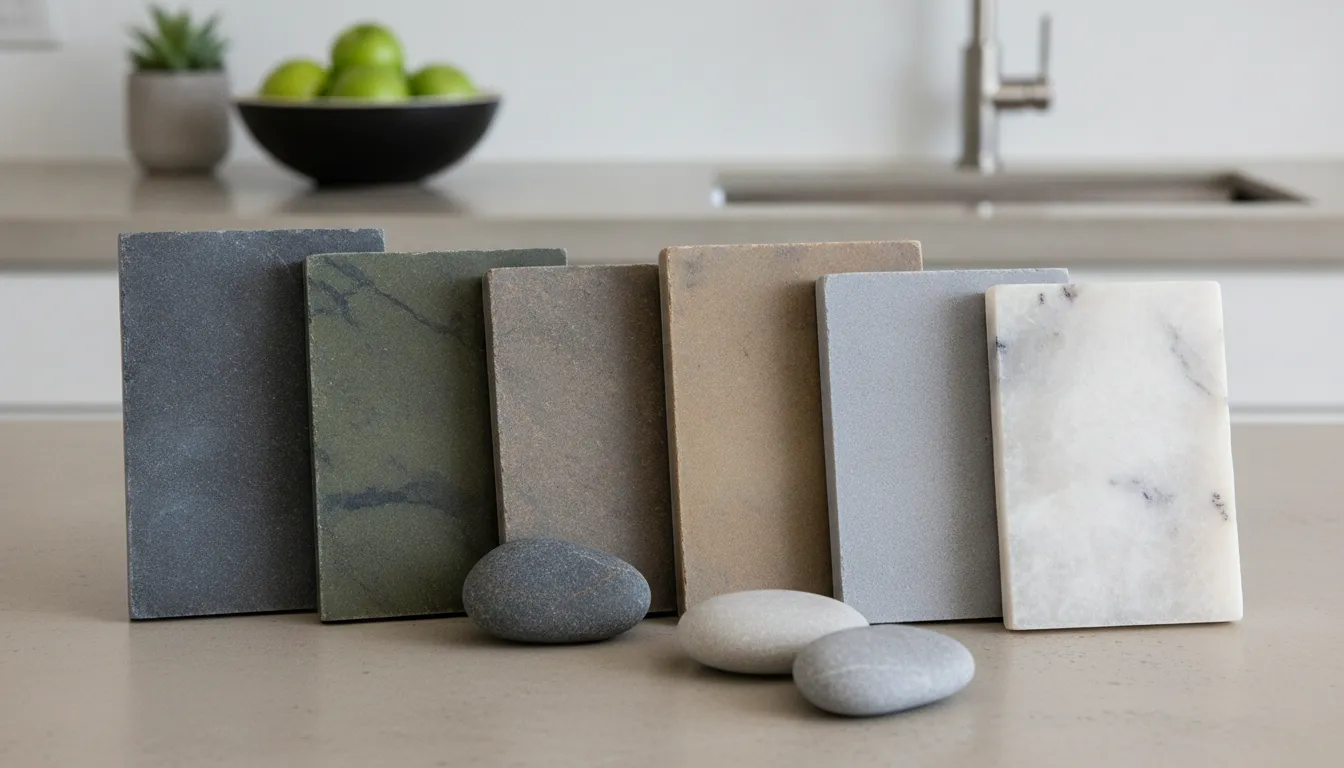
Countertop materials can look similar at a distance, but their origins are fundamentally different. That difference affects how each surface responds to heat, moisture, abrasion, cleaning products, and everyday use. Understanding the material itself gives Ottawa homeowners a more useful basis for comparing soapstone, granite, quartz, and marble than appearance alone.
Soapstone: a talc-rich metamorphic rock
Soapstone is a natural metamorphic rock composed primarily of talc, with varying amounts of minerals such as micas, chlorite, amphiboles, pyroxenes, and carbonates. Its talc content contributes to the stone's characteristically soft, smooth feel. Geology.com also identifies soapstone as a dense, heat-resistant rock with a high specific heat capacity, which helps explain its long-standing use around cooking and heat.
For Soapstone Pros projects, the material is sourced from the East Broughton, Quebec quarry region. Each slab is shaped from quarried stone rather than cast from a mixture, so natural veining, tonal variation, and mineral patterns are part of the finished surface. That geological origin is central to soapstone's appeal: the counter is both a functional work surface and a visible piece of the landscape from which it came.
Granite: a natural igneous stone
Granite is also quarried from the earth, but it forms as a hard igneous rock when molten material cools and solidifies. Its mineral composition commonly includes visible crystals, which create the distinctive speckled, granular appearance associated with many granite slabs. Because granite is a natural stone, no two pieces have exactly the same pattern, although colour and movement can vary substantially from slab to slab.
Granite's hardness makes it a durable countertop material. Its natural mineral structure also means that performance can depend on the specific stone and its porosity. Iowa State University Extension notes that granite countertops need regular sealing to improve resistance to staining, rather than eliminating the possibility altogether. Read the stone-care guidance for more detail.
Quartz and marble: engineered and metamorphic alternatives
Quartz countertops are manufactured surfaces, not slabs of solid natural quartz. They combine quartz stone with a synthetic polymer binder and are formed into consistent countertop material. This engineered composition allows for predictable colour and pattern options. Quartz does not require sealing, but Iowa State University Extension cautions that placing hot pans directly on it can cause damage.
Marble is a natural metamorphic carbonate stone created when limestone changes under heat and pressure. It is valued for its veining and luminous appearance, but marble is porous and requires periodic resealing. The same source recommends mild dish soap and warm water for routine cleaning. These differences in origin do not make one material universally right for every kitchen. They simply establish the practical properties that should guide the rest of a comparison.
Soapstone vs. Granite Countertops: Which Natural Stone Fits Your Kitchen?
Soapstone and granite can both bring the depth, variation, and permanence of natural stone to an Ottawa kitchen. The better choice depends less on a simple durability ranking and more on how you cook, clean, and want the surface to age.
Aesthetics and everyday character
Granite offers a broad range of colours and mineral patterns, from subtle movement to dramatic veining. Its visual character can make the countertop a strong focal point, especially in a kitchen designed around a particular slab. Soapstone has a quieter, more tactile appearance. Its deep grey tones and soft veining create a restrained backdrop for wood cabinetry, painted finishes, and traditional or contemporary interiors. Over time, soapstone can develop a richer patina, which many homeowners value as part of its natural character.
That softer feel is not a sign that soapstone is fragile. Soapstone is a dense metamorphic stone and is very durable in normal kitchen use. It is also hard to scratch or etch, although a heavy impact can dent it more readily than granite. Dropping a cast-iron pan or another heavy object on either surface is best avoided, and any material still benefits from thoughtful use.
Maintenance and resistance to heat
The most practical difference is maintenance. Granite is porous to varying degrees and requires regular attention to its protective seal. Iowa State University Extension notes that granite countertops may need sealing several times a year. Sealing improves resistance to staining, but it does not eliminate the possibility of a stain. The same guidance warns that acidic cleaners, including lemon juice, ammonia, and window cleaners, may damage granite surfaces. Read the stone-care guidance from Iowa State University Extension before choosing a cleaning routine.
Soapstone is non-porous, naturally resistant to stains, and tolerant of hot pans, so it does not require sealing. Those qualities suit cooks who move directly from the oven or cooktop to the counter. It is not maintenance-free, however. Regular mineral oil treatment helps maintain the appearance many homeowners want, and some owners prefer to let the surface age naturally instead.
For a busy Ottawa kitchen, granite may be the right fit when its colour range and hard surface are the priorities. And the household is comfortable keeping up with sealing and cleaner selection. Soapstone may be the better fit when direct-heat tolerance, stain resistance, tactile character, and a simpler sealing routine matter most. Both are legitimate natural-stone choices. The decision should follow the kitchen's working habits and the look you want to live with for years.
Soapstone vs. Quartz Countertops: Natural Stone vs. Engineered Surface
The most important difference between these two surfaces is what they are. Soapstone is a 100% natural stone, formed by geological processes and quarried as a solid slab. Quartz countertops are engineered products made from natural quartz stone combined with a synthetic polymer. Both can offer a practical, durable work surface, but they respond differently to heat, wear, and the visual character of a kitchen.
Composition and everyday performance
Soapstone is a talc-rich metamorphic rock. Its mineral composition gives it a dense, naturally non-porous surface that is highly resistant to stains and tolerant of hot pans. You can place a hot pot directly on a soapstone countertop without treating the surface as fragile. Iowa State University Extension describes soapstone as difficult to stain and tolerant of hot pans, while also noting that it does not require sealing. Read the stone-care guidance from Iowa State University Extension.
Quartz also has a non-porous surface and does not need sealing, which makes routine cleaning straightforward. Its engineered construction, however, means the resin component is more sensitive to concentrated heat than the stone itself. Hot pans placed directly on quartz can cause damage, so trivets or heat-resistant pads should be part of the kitchen routine. That is not a flaw in quartz; it is simply a use requirement that differs from soapstone.
Durability is about the type of wear you expect
For everyday spills, soapstone provides strong practical protection because liquids cannot readily penetrate its non-porous surface. It is also resistant to scratching and etching in normal use. Its relative softness can make it more susceptible to dents from a heavy object dropped on an edge or work area. Minor marks can often be addressed through careful sanding and oiling, and many owners appreciate the gradual patina that develops with use.
Quartz offers a consistent, hard-wearing surface for busy kitchens and avoids the sealing routine associated with some natural stones. Its heat limitation deserves attention in kitchens where cooking frequently moves from the stovetop to the counter. Using a trivet preserves the surface and is an easy habit to establish.
Matte character or uniform polish
Soapstone has a naturally soft, matte appearance. Its deep tones, subtle veining, and evolving patina give the counter a sense of age and material depth. No two slabs look exactly alike, so selection and layout are part of the fabrication process.
Quartz is manufactured for greater visual consistency. It can provide a glossy, uniform appearance with repeatable colour and pattern across an installation. The right choice depends on whether the kitchen calls for the organic variation of natural stone or the controlled, polished look of an engineered surface. Both can be thoughtfully designed; the distinction is between geological character and manufactured consistency.
Soapstone vs. Marble Countertops: Why Practicality Wins
Marble has earned its reputation for elegance. Its veining, soft visual movement, and refined finish can give a kitchen a distinctly sophisticated character. Soapstone offers a different expression of that same design appeal: a deep, natural surface with subtle variation that becomes richer as it develops a lived-in patina. For homeowners drawn to marble's timeless presence but concerned about daily upkeep, soapstone is often the more forgiving choice.
The central difference is porosity. Marble is a porous natural stone, even though it is durable. Iowa State University Extension recommends testing a marble countertop every couple of months to determine whether it needs resealing. Resealing helps protect the surface, but it adds another recurring maintenance task to an already busy kitchen. Learn more about stone countertop care from Iowa State University Extension.
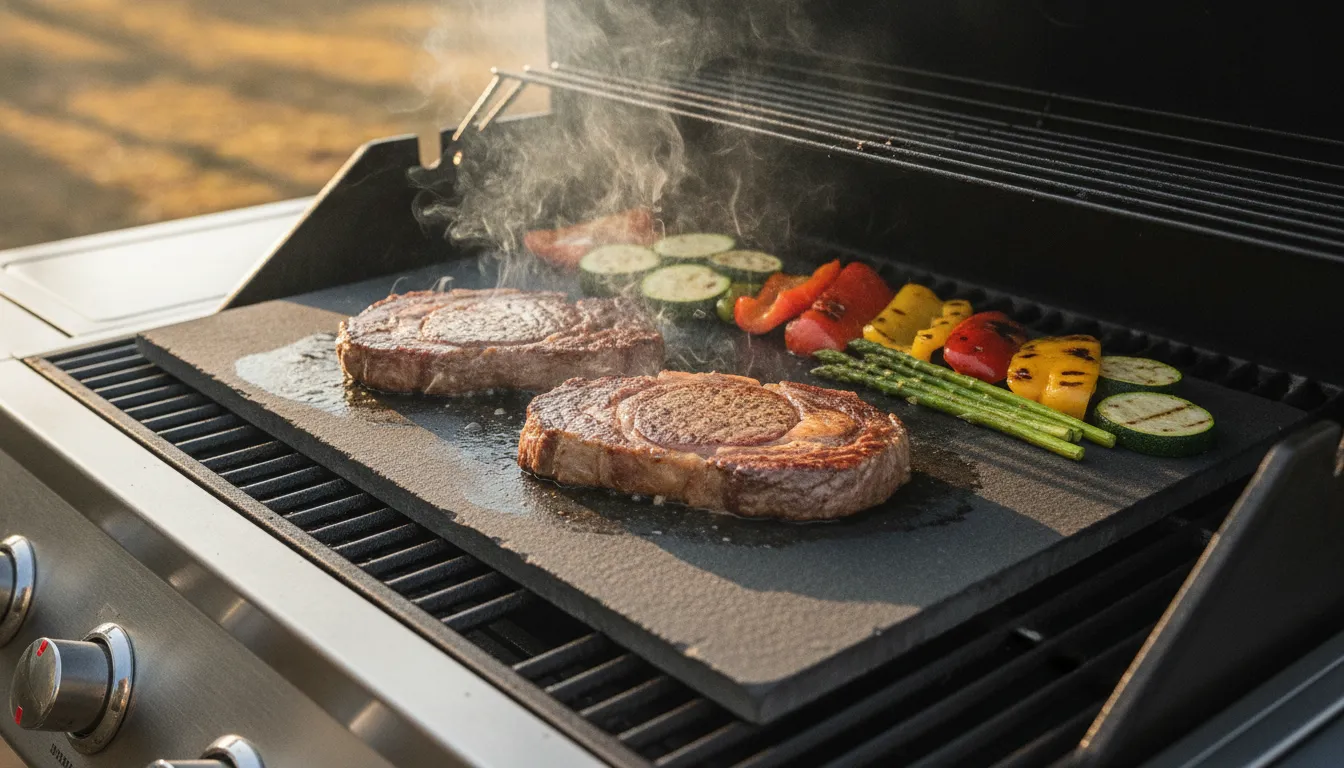
Soapstone is non-porous, so everyday spills are less likely to penetrate the surface and leave a stain. It does not require sealing, and it tolerates hot pans placed directly on the countertop. That difference matters when a kitchen is used for real cooking rather than staged for photographs. A roasting pan can move from the oven to the island without the same concern about heat damage that applies to more heat-sensitive surfaces.
Cleaning requires less caution
Marble also asks for discipline when cleaning. Because acids can etch its surface, only mild dish soap and warm water should be used, according to Iowa State University Extension. Lemon juice, vinegar, and other acidic ingredients are common in kitchens, which means an unnoticed spill can become a care issue rather than a simple wipe-up.
Soapstone is not indestructible, and it is not maintenance-free. It benefits from regular mineral oil treatment, which helps maintain its characteristic appearance. Heavy objects can also dent it if dropped. Those are practical considerations, but they are different from managing porosity and acid sensitivity every day. The result is a countertop that supports cooking habits instead of requiring constant vigilance.
Elegant design with a working-kitchen advantage
Choosing soapstone does not mean giving up a refined, high-end look. Its natural tonal variation works in traditional Ottawa homes, contemporary renovations, and spaces where the countertop needs to feel both architectural and welcoming. The surface can begin with a tailored finish and gradually acquire more character through use. For people who love marble's sense of permanence but want greater tolerance for heat. Spills, and ordinary kitchen activity, soapstone brings the design warmth with a simpler care routine.
The best material depends on how a household cooks, cleans, and lives. Marble remains a beautiful option for owners willing to follow its maintenance requirements. Soapstone is compelling when understated elegance and everyday practicality need to coexist.
Heat, Stains, and Durability: How the Four Materials Compare
Daily kitchen use puts a countertop through more than visual inspection. Hot cookware, spilled ingredients, sharp tools, heavy appliances, and cleaning products all test the surface. The most useful comparison is not which material is universally best, but how each one responds to the habits and maintenance level of a particular household.
Soapstone has a strong practical profile for cooks who want to place hot pans directly on the surface. It is non-porous, highly resistant to stains, and tolerant of hot pans. It is also durable and hard to scratch or etch, although a heavy dropped object can dent it more readily than it would scratch or chip. These characteristics are documented by Iowa State University Extension.
Performance factor | Soapstone | Granite | Quartz | Marble |
Heat resistance | Highly heat resistant; hot pans are tolerated. | Generally heat resistant, but use reasonable care with thermal shock and cookware. | Hot pans placed directly on the surface can cause damage. | Durable natural stone, but cookware and thermal changes still call for care. |
Stain resistance | Non-porous and highly resistant to staining. | Sealing improves stain resistance but does not eliminate staining. | Low-maintenance surface with no sealing requirement. | Porous, so spills require prompt attention. |
Durability | Very durable and hard to scratch or etch; heavy impacts may dent it. | Durable natural stone; care is needed around cleaners and impacts. | Durable manufactured surface; protect it from direct high heat. | Durable, but its porosity and sensitivity to some cleaners affect use. |
Sealing needed | No sealing required. | Yes; it may need sealing several times a year. | No sealing required. | Yes; test periodically and reseal as needed. |
Maintenance | Regular mineral oil treatment; clean spills normally. | Monitor the seal and avoid acidic cleaners that may damage the surface. | Routine cleaning; avoid direct hot pans. | Use only mild dish soap and warm water, and monitor the seal. |
Granite and marble are both durable natural stones, but their porosity changes the maintenance equation. Granite sealing helps resist stains, while marble requires periodic resealing and gentler cleaning. Quartz avoids sealing because it is manufactured from quartz stone and synthetic polymer, yet it needs protection from direct hot cookware. In a comparison of soapstone countertops vs granite quartz marble, heat tolerance, porosity. Impact expectations, and care requirements should be weighed together rather than treated as separate selling points.
How to Care for Each Countertop: Sealing, Oiling, and Cleaning
Soapstone: oil regularly, but never seal it. Soapstone is non-porous, so it does not need a sealing treatment. Its care routine is straightforward: clean the surface after use, then apply food-safe mineral oil periodically to deepen its colour and support an even, cared-for appearance. The exact frequency depends on how quickly the surface absorbs the oil and how much use the kitchen receives. A new countertop may need attention more often while the finish settles. Soapstone is tolerant of hot pans and resistant to staining, but heavy objects can still dent it, so use sensible care when moving cookware or appliances. See the common questions about soapstone care and properties for more guidance.
Granite: monitor the seal and test with water. Granite requires periodic resealing to maintain greater resistance to staining. A practical check is the water-bead test: place a few drops of water on the countertop and observe whether they bead on the surface. If the water absorbs rather than beads, the previous seal may have worn away. Granite countertops may need resealing several times a year, depending on the stone, use, and existing treatment. Sealing reduces the chance of staining, but it does not make granite completely stain-proof. For everyday cleaning, avoid acidic products such as lemon juice, ammonia, and window cleaners, which may damage the surface.
Marble: clean gently and check it every couple of months. Marble is durable, but it is porous and needs periodic resealing. Test the countertop every couple of months to determine whether the protection remains effective. Keep daily cleaning simple. Use only mild dish soap and warm water, then wipe away residue and standing moisture. Strong or unsuitable cleaners can affect the surface, while spills should be handled promptly to reduce the chance of staining. Marble rewards a consistent routine more than aggressive scrubbing.
Quartz: skip sealing, but protect it from heat and harsh chemicals. Quartz is a manufactured surface made from quartz stone and synthetic polymer, and it does not require sealing. Routine cleaning is therefore relatively low-care. Wipe spills promptly and follow the fabricator's care guidance for approved products. Do not place hot pans directly on the countertop, since concentrated heat can cause damage. Avoid harsh cleaners, including bleach-based products unless the manufacturer's instructions specifically permit them. Trivets and cutting boards are simple habits that protect the finish without adding a complicated maintenance schedule.
How to Choose the Right Countertop for Your Ottawa Home
The best countertop choice begins with how your kitchen actually works, not with a sample viewed under showroom lighting. Ottawa homeowners should consider cooking habits, cleanup routines, heat exposure, and the visual character they want the room to develop over time.
If you regularly move hot cookware from the range to the counter, soapstone deserves close attention. It is non-porous, resistant to stains, and tolerant of hot pans. That makes it a practical fit for active kitchens where the surface needs to support real cooking rather than require constant caution. Its natural composition also appeals to homeowners looking for a non-toxic, low-intervention material with an honest connection to the earth.
There is a tradeoff to understand. Soapstone is very durable and resistant to scratching and etching, but a heavy dropped object can dent it. Those marks are part of the material's character for some homeowners, while others may prefer a more uniform surface. Soapstone also develops a deeper patina as it is used. Mineral oil can be applied regularly to enrich its colour and keep the finish looking even, but the stone should not be treated as maintenance-free. Its evolving appearance is a feature if you want a countertop that records the life of your home rather than remaining visually unchanged.
Ask yourself a few practical questions before choosing:
Do you cook often with cast iron, Dutch ovens, or other hot cookware?
Would you rather accept a natural patina than worry about preserving a flawless finish?
Do you prefer occasional oiling over sealing or more restrictive heat precautions?
Will the dark, softly textured look complement your cabinets, lighting, and Ottawa home's architecture?
Sourcing and fabrication matter as much as the material itself. Soapstone Pros is an Ottawa-based specialist sourcing natural stone from East Broughton, Quebec, rather than treating soapstone as one option among many unrelated surfaces. Review examples of custom soapstone countertop installations to see how slab selection, edge details, sinks, and backsplashes can work together.
When you have narrowed down your priorities, reach out for a free quote. A specialist can help match the stone and fabrication details to your cooking habits, design goals, and Ottawa home.
Frequently Asked Questions
Which countertop is best for my kitchen: granite, quartz, marble, or soapstone?
The best choice depends on how you cook, how much maintenance you prefer, and the look you want to live with. Soapstone suits homeowners who value natural character, strong heat tolerance, stain resistance, and a surface that develops a gradual patina. Granite, quartz, and marble each offer distinctive colors and performance traits, so the right decision should reflect your daily habits rather than popularity alone.
What is the main downside of soapstone countertops?
Soapstone is softer than many countertop materials, so a heavy dropped object can dent it even though it is difficult to scratch or etch. Its dark surface also changes gradually with use, and many owners choose occasional mineral oil treatment to deepen the color and keep the finish looking even. That evolving character is a benefit for some kitchens and a drawback for others. Iowa State University Extension describes both the durability and maintenance considerations.
Does soapstone need to be sealed?
No. Soapstone is non-porous, so it does not require sealing to resist everyday stains. It does need regular mineral oil treatment if you want to enrich its color and support a consistent appearance. This is a different maintenance routine from sealing porous natural stone, and it is straightforward to discuss during the design and fabrication process.
Is soapstone cheaper than quartz or granite?
There is no reliable universal answer because the total project depends on slab selection, layout, edge details, sink work, fabrication, delivery, and installation. Custom soapstone work should be evaluated through a project-specific quote rather than a generic price comparison. A fabricator can also explain how each material's maintenance, heat tolerance, and long-term appearance fit your priorities before you choose.
Ready to Choose Your Countertop?
The right surface should fit how you cook, live, and care for your Ottawa home. A personalized conversation can help you weigh soapstone's natural character and practical performance against the alternatives in this guide.


Comments