
Greystone Soapstone Grilling Stone Amazon: Complete Guide
A grill can be hot and still cook unevenly. Flare-ups, cold spots, and coatings that are difficult to assess can make outdoor cooking less predictable, especially when you want a clean sear without scorching delicate foods.
The greystone soapstone grilling stone amazon shoppers can buy is a natural soapstone cooking surface. It holds and distributes heat evenly, shields food from direct flame, and contains no forever chemicals. The 16" x 8" x 0.75" stone preheats in about 20 to 30 minutes on a standard grill and is sold through Amazon in the United States and Canada.
Because soapstone is non-porous, naturally antibacterial, and resistant to stains, it also offers a practical surface for everyday grilling. It still benefits from sensible care and gradual heating, but it does not require sealing. The result is a grilling tool designed around steady heat and straightforward maintenance rather than complicated coatings or seasoning routines.
Explore the Greystone soapstone grilling stone and see why its natural material properties make a meaningful difference at the grill.
Start with the way the stone manages flame, heat, and food on the cooking surface.
Why a Greystone Soapstone Grilling Stone Belongs on Your Grill
More control over flame and heat
Great grilling depends on control. Direct flame can turn a small amount of dripping fat into a flare-up, leaving food scorched on the outside before the center is ready. A Greystone soapstone grilling stone creates a protective cooking surface between the food and the flame. That barrier helps prevent flare-ups while allowing the stone to deliver steady heat for more consistent cooking.
The result is a more forgiving way to sear. Meat can develop a browned exterior without sitting directly over an unpredictable burst of fire. Because the cooking surface heats evenly, there are fewer cold spots to manage as you move food around the grill. That consistency is especially useful for thicker cuts, delicate vegetables, and foods that tend to dry out when exposed to harsh, uneven heat.
A natural surface for serious outdoor cooking
Soapstone is valued for its thermal properties as well as its natural composition. Research from the University of Virginia describes soapstone as a material that retains heat exceptionally well. While a study published through the National Library of Medicine examined its effectiveness for thermal energy storage. On the grill, that thermal stability translates into a surface that keeps working steadily after the initial heat-up.
Greystone also avoids the concern of a chemical-coated cooking surface. The stone contains no forever chemicals, and it does not rely on a synthetic non-stick coating to release food. Instead, you are cooking on natural stone. For outdoor cooks who pay close attention to ingredients, smoke, and preparation, that simplicity is part of the appeal.
Clean cooking with less absorption
Soapstone is naturally non-porous and antibacterial. Its surface does not readily absorb food odors, residues, or contaminants, and it is stain-resistant after a meal built around marinades, vegetables, or fatty cuts. These properties make cleanup more straightforward and give the stone a clean, dependable character from one cookout to the next.
That combination of flame protection, even searing, thermal stability, and a natural non-porous surface is why many outdoor-cooking enthusiasts treat soapstone as a pro griller's secret weapon. It does not replace good temperature management or careful cooking. It gives those skills a steadier surface to work with, so the grill becomes easier to control and the food can take center stage.
How a Soapstone Grilling Stone Works: Heat, Retention, and Even Cooking
The cooking performance of soapstone starts with its density. Also called steatite, soapstone is a natural mineral that absorbs heat gradually rather than reacting instantly to every change in the grill. Once heated, the stone holds that energy and releases it steadily across the cooking surface. This is why it feels different from a thin metal grate: the stone becomes a stable. Radiant cooking surface instead of simply transferring a sharp burst of heat at the points directly above the flame.
Academic research summarized by the University of Virginia notes that soapstone bowls retain heat exceptionally well. That same thermal behavior is useful on the grill. As the stone warms, its high mass helps distribute heat from hotter areas toward cooler edges. The result is a more consistent surface temperature, with fewer cold spots and less dependence on the exact position of each piece of food.
Soapstone is not just a passive cooking plate. It functions as a compact form of thermal energy storage. A peer-reviewed study, Experimental Investigation of Soapstone and Granite Rocks as Energy-Storage Materials, examines soapstone's ability to store and manage thermal energy. In practical grilling terms, that stored heat continues working when the grill cycles, the lid is opened briefly, or food is moved across the surface. The stone moderates those fluctuations, supporting more consistent heat management from the first side of a steak to the last vegetable on the grill.
That steady radiation also changes how food cooks. Instead of relying on direct flame contact, the surface delivers even heat edge to edge. Meat can develop a more uniform sear without isolated flame-hot patches, while vegetables and other delicate foods receive gentler, more predictable heat. Shielding food from direct flame also helps reduce the flare-ups that can burn the outside before the center is ready. With fewer sudden temperature spikes, moisture is less likely to be driven out too quickly, helping food stay tender and juicy.
Preheating is part of the mechanism, not an optional extra. Give a Greystone stone time to absorb heat throughout its thickness before cooking, then allow its thermal mass to do the work. The exact result will still depend on the grill, the food, and the cooking time. But the principle remains straightforward: heat the dense natural stone gradually, let it stabilize, and cook on the evenly heated surface. That combination of retention, radiation, and controlled heat management is what makes soapstone valuable for outdoor cooking.
Greystone at a Glance: Size, Material, and What to Expect
Greystone is Soapstone Pros' proprietary grilling-stone line, made from natural North American soapstone rather than a coated or manufactured cooking plate. Soapstone is a dense, non-porous natural stone valued for its ability to hold heat. That combination gives Greystone a substantial cooking surface while keeping the format practical for everyday grilling.
A compact format with real thermal mass
Each Greystone measures 16 inches by 8 inches by 0.75 inches. The footprint is large enough for a useful cooking area, yet compact enough to move, store, and position on a standard grill. Its thickness gives the stone meaningful thermal mass, so it does more than simply sit between the food and the grate. Once heated, it helps maintain a steady cooking surface as food is added.
Because soapstone retains heat exceptionally well, the experience is different from cooking directly over an exposed flame. Greystone shields food from direct flame contact and helps reduce flare-ups caused by dripping grease. The result is a more controlled surface for searing and cooking foods that benefit from steady heat rather than sudden flame exposure.
What the natural stone looks like
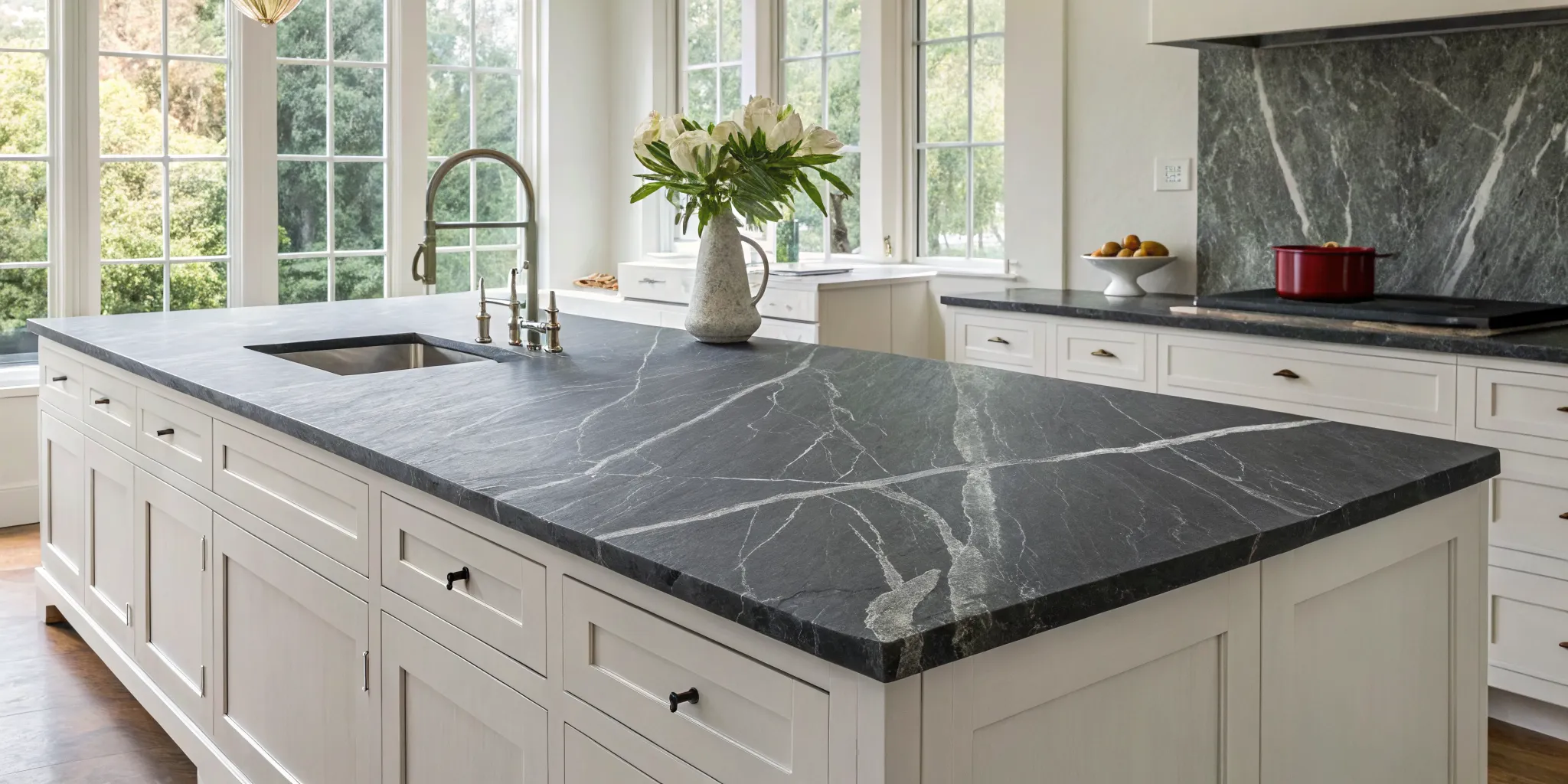
Natural soapstone is not visually uniform like a synthetic slab. Greystone may show distinctive veining and tonal variation, reflecting the character of the stone itself. With use and occasional mineral-oil treatment, the surface can develop a deeper patina. This gradual change is part of the material's appeal, not a sign that the stone is losing its cooking performance.
The surface is also non-porous and stain-resistant, which helps prevent food residues and odors from soaking in. Greystone does not need sealing. It does benefit from sensible care, including gradual heating and cooling and occasional mineral oil when you want to enhance its appearance.
Allow time for the stone to heat
On a standard grill, Greystone takes approximately 20 to 30 minutes to preheat. That warm-up period is important because the stone needs time to build an even cooking temperature throughout its mass. Plan for the preheat before placing food on the surface, and introduce heat gradually rather than subjecting the stone to an abrupt temperature change.
Greystone soapstone grilling stones are sold exclusively through Amazon in the United States and Canada. To review the product details and current purchase options, visit the Greystone soapstone grilling stone page.
Is Soapstone Safe to Cook On? Non-Porous, Antibacterial, and Chemical-Free
Yes. Soapstone is a natural mineral cooking surface with properties that suit direct, high-heat grilling. It is non-porous, naturally antibacterial, heat-resistant, and stain-resistant. It also requires no sealing, so there is no synthetic coating to wear away or maintain between uses.
Soapstone is primarily made of talc and chlorite. The CDC and NIOSH identify soapstone as containing less than 1% quartz. A useful reference when evaluating the material itself rather than assuming that every stone product has the same composition. Read the CDC NIOSH soapstone reference for the mineral-safety information.
A non-porous surface keeps cooking cleaner
Because soapstone does not readily absorb liquids, food juices, odors, or contaminants, the cooking surface is easier to wipe clean after grilling. Its naturally antibacterial character adds another practical benefit for a surface used around raw and cooked foods. Stain resistance helps preserve the stone's appearance, while the absence of pores means it does not need a sealing treatment like some other countertop or stone materials.
No material eliminates the need for sensible food-safety habits. Clean the stone after it cools, use separate utensils for raw and cooked food, and follow the care instructions supplied with the Greystone. Soapstone also benefits from occasional mineral oil treatment when you want to deepen its color and support its finish. That is care, not a sealant requirement.
Natural stone, with no synthetic coating or forever chemicals
A Greystone is made from natural soapstone rather than a coated non-stick plate. The product specification states that it contains no forever chemicals. That makes the surface appealing to cooks who want a straightforward material between their food and the grill. The stone itself provides the cooking surface, heat retention, and protection from direct flame without relying on a chemical film.
Its heat resistance also helps when cooking over a hot grill, but safe use still depends on the way heat is introduced. Soapstone resists thermal shock when it is heated and cooled gradually. Preheat the stone progressively rather than moving a cold stone directly into an extreme heat change, and allow it to cool before cleaning or handling it. Soapstone is durable, but it is not indestructible.
What this means on the grill
The stone creates a stable cooking surface that separates food from direct flame and helps prevent flare-ups caused by dripping grease. That supports more controlled grilling while preserving the natural characteristics that make soapstone useful in kitchens and outdoor cooking. For cooks comparing coated plates, ceramic surfaces, or cast iron, the appeal is simple: a non-porous natural mineral, no sealing, no synthetic coating, and careful heat management.
Soapstone vs. Ceramic Pizza Stone vs. Cast Iron for Grilling
All three materials can improve grilling, but they create different cooking experiences. The right choice depends on whether you value steady heat, maximum searing, easy care, or the ability to move the surface between cooking setups.
Soapstone is dense and non-reactive, so it stores heat and releases it evenly across the cooking surface. That thermal mass helps reduce cold spots, while the stone shields food from direct flame and helps prevent flare-ups caused by dripping grease. It does not need seasoning, although occasional mineral oil can enhance its appearance and protect the surface. Its non-porous structure also makes cleanup straightforward.
Ceramic pizza stones are useful when the goal is a dry, high-heat baking surface. They can produce excellent crust texture, but ceramic is less forgiving when exposed to abrupt temperature changes. A cold stone placed on a hot grill, or a hot stone cooled too quickly, can experience thermal shock and crack. Gradual heating and cooling are important.
Cast iron remains a strong option for high-heat searing. It is durable, familiar, and holds heat well, but it requires seasoning and rust care. Cast iron can also react with acidic foods, particularly when the seasoning is thin or damaged. That makes maintenance more involved for cooks who regularly prepare tomatoes, citrus-based marinades, or other acidic ingredients.
Material | Heat retention | Flare-up resistance | Maintenance | Best for |
Soapstone | High, with even heat across its dense surface | High, because the stone shields food from direct flame | No seasoning; clean after use and apply mineral oil occasionally if desired | Steady cooking, vegetables, meats, and flare-up-sensitive foods |
Ceramic pizza stone | High, with strong heat for baking | Moderate; it creates separation from the flame but does not replace careful grill management | Keep dry, avoid thermal shock, and handle carefully to reduce cracking risk | Pizza and flatbreads when a dry baking surface is the priority |
Cast iron | High, especially for direct searing | Moderate; grease can still reach the flame around or across the cooking surface | Season regularly, dry thoroughly, and protect against rust | Deep searing, grill marks, and cooks comfortable with routine upkeep |
For outdoor cooks who want portable thermal mass without seasoning, a Greystone soapstone grilling stone is a practical middle ground. It is thick enough to hold heat yet compact enough to move, and soapstone resists thermal shock when heated and cooled gradually. Ceramic may be the better fit for dedicated pizza baking, while cast iron suits cooks who prefer aggressive searing and do not mind its care routine. The best material is the one that matches how you actually grill, not simply the one that reaches the highest temperature.
For larger natural-stone surfaces around the home, from kitchen islands to hearths, explore custom soapstone projects from Soapstone Pros and request a free quote.
How to Use Your Greystone Soapstone Grilling Stone: Preheat, Cook, and Clean
Using a Greystone grilling stone is straightforward. But the best results come from treating the soapstone as a natural heat-retaining cooking surface rather than putting it over an already blazing grill. Give it time to warm gradually, let its thermal mass build, and allow the stone to provide the steady cooking surface your food needs.
- Place the stone on a cool grill.
Set the Greystone securely on the grill grates before turning on the heat. Check that it is stable and that there is enough room to handle food safely. Keeping the stone in place from the beginning helps it warm evenly and reduces the risk of thermal shock.
- Preheat gradually for 20 to 30 minutes.
On a standard grill, allow approximately 20 to 30 minutes for the stone to reach cooking temperature. Avoid moving directly from cold conditions to an intense high-heat setting. Soapstone resists thermal shock when it is heated and cooled gradually, while abrupt temperature changes can increase the risk of cracking.
- Arrange food on the heated surface.
Once preheated, place food directly on the stone. It creates a consistent cooking surface that protects food from direct flame contact and helps produce even searing. Because the stone shields drippings from the flame, it also helps prevent flare-ups during grilling. Leave enough space between pieces for heat to circulate and for you to turn food comfortably.
- Cook with the grill closed or open as your recipe requires.
Use the stone for foods that benefit from steady, controlled heat, including meat, vegetables, and other grill-friendly preparations. Soapstone's heat retention helps limit cold spots, so monitor the food as it cooks rather than relying only on the grill's air temperature. If you need to adjust the heat, make changes gradually.
- Let the stone cool naturally.
After cooking, turn off the grill and leave the Greystone in place until it has cooled. Do not pour cold water over a hot stone, carry it directly into a cold environment, or place it on a cold, wet surface. Gradual cooling is part of protecting the stone from thermal shock.
- Wipe or wash the cooled surface.
Once the stone is cool enough to handle, wipe away food residue or wash it as needed. Soapstone is non-porous, non-absorbent, and stain-resistant, so it does not readily hold onto food odors, grease, or contaminants. Use a suitable cloth or sponge and rinse away any remaining residue before the next use. Avoid treating a hot stone with water.
- Refresh the surface occasionally with mineral oil.
Soapstone does not require sealing, but an occasional mineral oil treatment can enhance its appearance and help protect the surface. Apply it only to a clean, dry, cooled stone, following the care guidance supplied with the product. Over time, normal use may create a natural patina, which is part of soapstone's character and does not prevent it from performing as a cooking surface.
The central habits are simple: start cool, heat gradually, cook on the stone without direct flame exposure, and allow the surface to cool before cleaning. With that routine, your Greystone can deliver repeatable grilling results while remaining easy to care for between barbecues. For more on soapstone upkeep, review the care for soapstone guidance at Soapstone Pros.
What to Cook on a Soapstone Grilling Stone: Steaks, Vegetables, and Flatbreads
A Greystone gives you more control than a grill grate alone, especially when cooking foods that benefit from steady surface heat. Soapstone's density and thermal stability help it retain heat and distribute it evenly across the cooking area. Research on soapstone's thermal properties supports its ability to store heat effectively, while the stone's direct-flame barrier helps keep cooking more consistent. Greystone soapstone grilling stone is a practical surface for foods that need a strong sear without the bitter char, flare-ups, or scorched edges that can come from exposed flame.
Steaks and burgers
Steaks are an obvious starting point. Preheat the stone gradually, then place the meat on the hot surface and let the stone build an even sear. Because the food is protected from direct flame, the outside can brown without the surface repeatedly burning when fat drips onto the burners. This is especially useful for burgers, which can produce flare-ups on an open grate. The non-porous surface also helps keep cooking juices and seasoning where they belong, rather than allowing them to disappear into the stone.
Use the stone for chicken as well. Boneless breasts, thighs, and smaller pieces can cook steadily over radiant heat, reducing the risk of a blackened exterior before the center is ready. Turn food according to its thickness and your grill's heat, and always verify doneness with appropriate food-safety practices.
Fish and delicate foods
Fish benefits from the smooth, stable cooking surface. Fillets are less likely to fall through the grate, and gentle heat can help preserve a tender texture. The surface does not add a smoky coating from direct flame, so mild fish, shrimp, and seasoned seafood retain their intended flavor. Lightly oiling the food rather than flooding the stone can make turning easier.
Vegetables, fruit, and flatbreads
Slice zucchini, peppers, onions, mushrooms, and eggplant into pieces of similar thickness so they cook at the same rate. The stone's even heat encourages browning while helping vegetables retain moisture. It also works well for halved peaches or pineapple when you want caramelized edges without losing the fruit's structure.
Flatbreads, naan, tortillas, and pizza-style cooks are another strong match. The heated surface supports browning on the underside while the grill provides surrounding heat. Keep toppings reasonably light and use manageable portions so the bread firms before the top becomes overloaded. From steak night to vegetable sides and flatbreads, the stone's strength is simple: steady heat, fewer flare-ups, and more predictable results.
Buying the Greystone Soapstone Grilling Stone on Amazon: Shipping, Returns, and Care
Greystone grilling stones are sold exclusively through Amazon in the United States and Canada. That makes ordering straightforward: choose the Amazon marketplace for your country, review the current product listing, and enter your delivery details at checkout. Shipping availability, delivery dates, and fees can vary by destination and by Amazon's current fulfillment options, so confirm those details before placing the order. Soapstone Pros does not publish a separate custom-work price or redirect buyers to an unverified product page.
For an overview of the stone's material, dimensions, and grilling purpose, visit the Greystone soapstone grilling stone page on the Soapstone Pros website. The page explains the product and routes shoppers to Amazon for the purchase. Greystone stones measure 16 by 8 by 0.75 inches, giving them a practical cooking area while remaining portable enough to move between suitable grills.
What to know about Amazon returns
Amazon provides a 30-day money-back guarantee for the Greystone purchase. Keep the order information and review the return conditions shown on the listing at the time you buy. If the item arrives damaged, or if it does not meet the condition described in the listing. Use Amazon's order support and return process rather than attempting to arrange a separate website purchase or exchange. The exact instructions can depend on the marketplace and order status.
Prepare the stone before its first cook
Before cooking, inspect the stone and place it securely on the grill. Introduce heat gradually. On a standard grill, Greystone typically preheats in approximately 20 to 30 minutes. Gradual heating helps soapstone manage thermal change and supports the stone's resistance to thermal shock. Follow the product guidance for your grill and allow the stone to cool naturally after use. Avoid moving a hot stone directly onto a cold or wet surface.
For routine care, wipe or wash the non-porous, stain-resistant surface after it has cooled. Soapstone does not require sealing, although an occasional treatment with mineral oil can enhance its appearance and protect the surface. It may develop a natural patina over time, which is part of the character of a real stone cooking surface and does not prevent normal grilling use.
Discover our custom soapstone projects and request a free quote when you are ready for larger natural-stone surfaces. For quick answers on care, preheating, and everyday grilling, the questions below cover the essentials.
Frequently Asked Questions
Is soapstone safe for cooking?
Yes. Soapstone is a non-porous, naturally antibacterial cooking surface that does not require sealing. Greystone also contains no forever chemicals or synthetic non-stick coating, so food cooks directly on natural stone. Soapstone's mineral composition is described by the CDC as primarily talc and chlorite, with less than 1% quartz: CDC/NIOSH.
How long does a Greystone take to heat up?
On a standard grill, allow approximately 20 to 30 minutes for the 16" x 8" x 0.75" stone to preheat fully. Introduce heat gradually rather than placing a cold stone over an already intense flame. This gives the stone time to build its thermal mass and helps protect it from thermal shock.
Will a Greystone crack from grill heat?
Soapstone resists thermal shock when it is heated and cooled gradually, but no natural stone should be treated as indestructible. Avoid sudden temperature changes, direct flame contact, and rough handling. With proper care, soapstone has a service life of 30 years or more according to the product guide.
How do I clean and care for a soapstone grilling stone?
Let the stone cool naturally, then wipe or wash away food residue. Its non-porous, stain-resistant surface does not absorb grease or odors, making cleanup straightforward. Soapstone does not need sealing, although an occasional food-safe mineral oil treatment can refresh its appearance. A developing patina is normal and does not prevent the stone from cooking effectively.
Where can I buy the Greystone soapstone grilling stone?
Greystone grilling stones are sold exclusively through Amazon in the United States and Canada. Check the applicable Amazon listing for your market when you are ready to order, and confirm the product dimensions and delivery details before purchase.
Ready to Shop the Greystone Soapstone Grilling Stone?
Greystone brings soapstone's steady, even heat to outdoor cooking, helping you prepare grilled foods with a dependable surface and straightforward care. When you are ready to add one to your setup, shop the Greystone soapstone grilling stone on Amazon. For a separate residential or commercial project, contact Soapstone Pros about custom soapstone fabrication and a free quote.


Comments