
Soapstone Supplier Architect Designer Ottawa: The Guide
For a residential kitchen, hospitality space, or civic project, material selection affects more than appearance. It shapes maintenance, performance, detailing, and the story a finished space tells. Ottawa design professionals need a stone partner who understands those decisions at specification level, not simply a showroom salesperson.
When evaluating a soapstone supplier architect designer ottawa professionals can rely on, look for Canadian-sourced material, specialist fabrication, clear technical guidance, and installation support within the Ottawa Capital Region. Soapstone is non-porous, naturally antibacterial, heat-resistant, stain-resistant, and does not require sealing, while occasional mineral-oil treatment helps develop its characteristic patina.
This guide follows the process from evaluating soapstone's performance and provenance to choosing slabs, coordinating fabrication, and planning installation. It begins with the reasons this distinctive natural stone continues to earn a place in thoughtful residential and commercial specifications.
Book your free personalized quote for a custom soapstone project and get specialist guidance on sourcing, fabrication, and installation from a fabricator that works exclusively with soapstone.
Why Architects and Interior Designers Specify Soapstone
Material selection shapes how a project performs, feels, and ages. Soapstone gives architects and interior designers a combination that is difficult to replicate: practical resilience, quiet visual character, and a tactile surface that becomes more distinctive with time. It is especially well suited to kitchens, hearths, utility spaces, and other areas where heat, moisture, and daily contact are part of the design brief.
Performance without unnecessary coatings
Soapstone is non-porous, naturally antibacterial, heat-resistant, and stain-resistant. Its dense surface does not require sealing, which can simplify a specification and remove the need to select, apply, and eventually renew a surface coating. Wine, food residues, and other common household stains are less likely to penetrate the stone, making it a practical choice for busy kitchens and hospitality settings.
That does not mean the material is maintenance-free. Occasional mineral oil can deepen its colour and support the desired finish, while normal use may introduce small marks or scratches. Those changes are part of soapstone's character rather than evidence of a failing surface. Designers can therefore present it honestly as a material that develops a lived-in patina, not one that must remain visually unchanged.
Heat capacity that supports demanding spaces
Soapstone's density gives it high heat capacity. It can accept hot cookware directly, making it a natural candidate for kitchen work surfaces, cooking areas, and hearth applications. Its thermal behaviour also has architectural value beyond simple heat resistance. Research describes soapstone as a dense metamorphic rock used for energy storage because it can absorb and release heat over time. The academic discussion of its thermal-storage properties is available in this study on soapstone and thermal energy storage.
Soapstone also resists thermal shock when it is heated and cooled gradually. That distinction matters in a professional specification. The material is highly tolerant of normal hot-and-cool cycles, but good detailing and sensible use still matter. Allowing temperature changes to occur progressively helps protect the stone and supports long-term performance.
A surface people want to live with
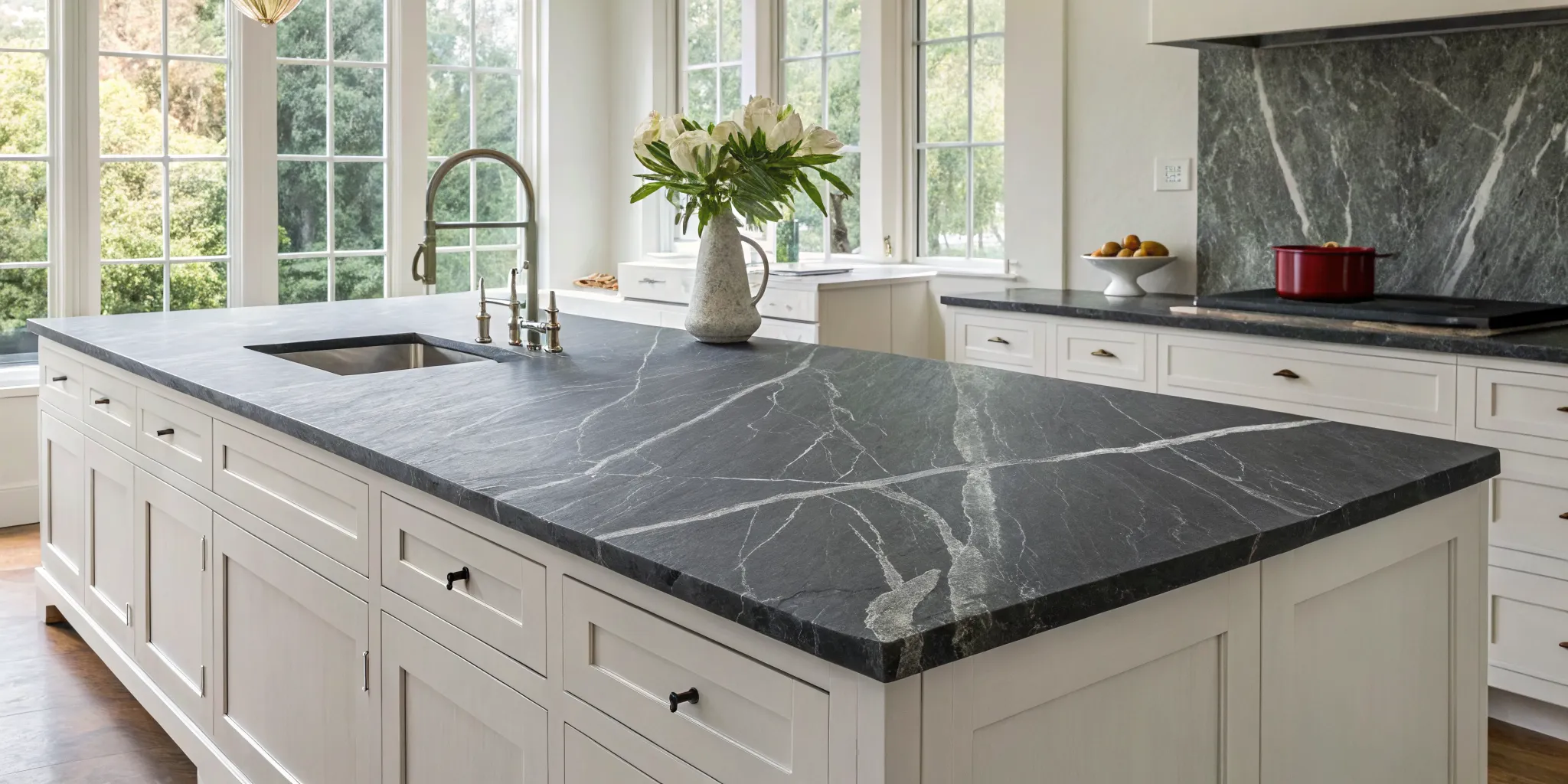
Performance is only part of the appeal. Soapstone has a soft, almost velvety tactile quality that feels warmer and less visually severe than many polished stone surfaces. Its natural tones can begin as a soft gray and mature toward deeper charcoal or black, especially as the surface is used and periodically oiled. This evolving beauty gives a project a sense of continuity. It can complement traditional architecture, settle into a contemporary interior, or provide a restrained focal point on a kitchen island without competing with the rest of the palette.
For a designer, that blend of durability and sensory appeal creates specification flexibility. For a client, it offers a surface that performs under real conditions and becomes more personal over time. The strongest results come from matching the stone's properties, finish, and expected patina to the way the space will actually be used.
Choosing a Soapstone Supplier for Ottawa Architects and Designers
For a trade professional, selecting a soapstone supplier is also a decision about technical accountability. The right fabricator should understand how the material behaves from slab selection through installation. And should be able to explain those decisions clearly to an architect, designer, builder, and client. A specialist partner helps protect the design intent while reducing avoidable surprises during fabrication and site work.
Look for a true soapstone specialist
Soapstone is not simply another option in a general countertop shop's material catalogue. Its softness, natural variation, and tactile finish call for a fabricator who works with the stone regularly. Ask how the shop handles seam placement, edge details, sink cutouts, backsplashes, and the visual direction of each slab. These details matter because a successful installation should feel composed rather than assembled from unrelated pieces.
In particular, tight, seamless-looking joints require specialist fabrication and careful planning. An experienced soapstone fabricator can account for the stone's character when laying out a worktop, then use appropriate cutting, honing, and joining techniques to create a cohesive surface. That level of material fluency is valuable when a project includes a long island, an integrated backsplash. A fireplace surround, or multiple rooms that need to read as part of one design.
Review completed work that resembles the scale and finish level of your project. A useful portfolio should show more than close-up surfaces. Look for evidence of thoughtful transitions, consistent finishing, clean junctions, and installations that work within the architecture. It is also reasonable to ask who will manage the project, where fabrication takes place, and how design questions are handled before a slab is cut.
Confirm the service area before specifying the partner
Service geography should be explicit in the specification. A regional specialist serving the Ottawa Capital Region can provide local consultation, field coordination, and installation support for projects in Ottawa and nearby communities. That local presence makes it easier to review site conditions, coordinate with other trades, and resolve installation questions in person.
Fabrication and installation are not the same service, however. Custom-cut soapstone slabs can be shipped throughout North America for projects where the local contractor or installer will manage the site work. A soapstone supplier should state this distinction clearly so an architect or designer does not assume that a nationwide shipping capability includes nationwide installation. For projects outside the Ottawa Capital Region, confirm receiving requirements, installer responsibilities, templates, and the handoff process before the material is ordered.
Use consultation to test the working relationship
A regional specialist consultation can reveal more than a sample review. Bring the drawings, intended use, finish direction, and performance priorities to the conversation. The fabricator should be able to discuss sourcing, slab selection, joint strategy, fabrication limits. And the practical sequence from template to installation without steering the project toward a generic solution.
For Ottawa architects and designers, that early exchange is a useful quality check. It shows whether the supplier can contribute technical judgment while respecting the design authority of the project team. A partner who communicates clearly, understands the material deeply, and defines local installation or shipped-fabrication responsibilities gives the finished soapstone work a stronger foundation.
Sourcing Canadian Soapstone from East Broughton, Quebec
For architects and designers, quarry origin is more than a point on a map. It helps establish what the material is, how it enters the project, and whether its environmental story supports the values behind the specification. Soapstone sourced from East Broughton, Quebec gives Ottawa projects a Canadian point of origin and a regional North American supply chain. While preserving the character of a natural stone formed by geological processes rather than manufactured to a uniform formula.
Why regional provenance matters
A known quarry source makes material conversations more precise. Rather than specifying soapstone as an interchangeable surface category, the design team can discuss its actual origin, appearance, density, finish, and intended application with a specialist fabricator. That information supports more confident decisions during material reviews, particularly when a project calls for a surface with a strong sense of place.
East Broughton is in Quebec, close to the Ottawa market compared with distant international supply routes. Canadian sourcing does not eliminate every transportation impact, but it creates a more legible regional story and keeps the material connected to a North American supply chain. For projects pursuing thoughtful material selection, that transparency is valuable. It gives the architect, designer, builder, and client a clearer basis for discussing provenance instead of relying on vague claims about natural stone.
A natural, non-toxic alternative to resin-based surfaces
Soapstone is a natural stone, not an engineered composite assembled with chemical resins. Its non-porous structure, naturally antibacterial character, heat resistance, and stain resistance allow it to perform without chemical sealants. Those attributes can be relevant in kitchens, utility spaces, hospitality settings, and other interiors where the material palette should support straightforward care and a lower-chemical approach.
It is also important to describe the comparison accurately. Engineered stone products can involve binders and resins, while soapstone is quarried and fabricated as stone. Customer requirements and product formulations vary, so a project team should review the documentation for any specified engineered product. Still, choosing a natural soapstone surface can help avoid introducing resin-based material where a durable, non-porous stone is a better fit. The material is often considered for sustainable and non-toxic design goals, not because it is maintenance-free or automatically satisfies every certification requirement.
Quarry origin also informs the design narrative. East Broughton soapstone connects a finished countertop, hearth, island, or other custom element to Canadian geology and skilled stone craftsmanship. Its value lies in that combination of provenance, performance, and restraint: the surface can serve demanding spaces without looking overly manufactured. A specialist can help confirm the appropriate slab and finish for the application, then translate the selected material into a carefully fabricated surface.
From Slab to Surface: The Fabrication Process for Trade Projects
Successful soapstone work begins before the first cut. For architects, interior designers, and builders, the fabrication process should translate the design intent into a surface that fits the room. Performs as specified, and reflects the character of a natural material. A specialist fabricator can coordinate those decisions from the initial drawings through the finished installation, with particular care given to joints, edges, and transitions.
- Confirm the design intent and site conditions.
Start with the drawings, dimensions, elevations, sink or appliance specifications, edge details, and intended use of each surface. The fabricator should also review access, support, clearances, and any features that affect templating. This early discussion helps resolve practical questions before material is cut and protects the visual priorities of the project.
- Select the right slab for the application.
Soapstone is a natural stone, so each slab contributes its own tone, movement, and veining. Review available material against the project's palette and identify how the grain or markings should run across adjoining pieces. For a prominent island, reception counter, hearth, or other focal surface, slab selection is part of the design process, not simply a purchasing step.
- Translate the approved details into precise cuts.
Once the layout is confirmed, the fabricator creates the individual components, including cutouts, corners, returns, and other site-specific geometry. Waterjet cutting can support accurate, complex profiles where the project calls for them. The goal is not just dimensional accuracy, but a layout that makes the finished stone read as an intentional, continuous composition.
- Shape and profile the edges.
Edges may be eased, rounded, or given a more defined profile to suit the surrounding architecture and the way the surface will be used. Soapstone can be shaped and honed with traditional stone-working tools, giving a specialist room to refine tactile details rather than relying on a one-size-fits-all profile. Careful edge work also helps coordinate the countertop with cabinetry, wall finishes, and adjacent materials.
- Finish and hone the surfaces.
Honing establishes the desired touch and visual depth while retaining the natural character of the stone. This stage is also where the fabricator checks faces, edges, cutouts, and transitions before delivery. Tight, seamless joints require specialist judgment in preparation and finishing. When adjoining pieces are aligned and worked correctly, the connection feels quiet and integrated instead of distracting from the overall design.
- Install for the project's location and scope.
For projects in Ottawa and the surrounding Capital Region, Soapstone Pros can coordinate site-specific installation as part of the fabrication process. Outside that service area, custom-cut slabs can be shipped throughout North America as a fabrication-only solution, with installation arranged locally by the project team. Clarifying this distinction at specification stage keeps responsibility, sequencing, and site coordination clear from the outset.
That continuity, from material selection to final fit, is what separates specialist soapstone fabrication from a generic stone order. It gives the trade team a knowledgeable partner for the details that make a natural surface look deliberate and enduring.
Specifying Soapstone for Commercial Projects in Ottawa
Commercial interiors ask more of a surface than visual appeal. Restaurant counters, bar tops, office reception desks, washrooms, and service areas must withstand repeated contact, heat, spills, cleaning, and the daily pressure of a busy public environment. Soapstone gives architects and designers a material that can meet those demands while bringing a warmer, more distinctive character than a standard commercial finish.
For food-service settings, its non-porous, naturally antibacterial surface is a practical advantage. Soapstone does not absorb common kitchen stains such as wine or acidic juices, and it does not require a chemical sealant. That combination supports a straightforward maintenance approach for bar and prep areas, although the surface should still be cleaned according to the facility's sanitation procedures.
Consideration | Soapstone | Granite | Engineered quartz |
Durability in high-frequency use | Reliable for busy commercial kitchens and develops character through use. | Hard and durable, with performance varying by stone selection and finish. | Consistent manufactured surface suited to many commercial applications. |
Heat resistance | High heat capacity and suitable for direct contact with hot cookware. | Generally heat resistant, but specifications should account for the selected slab and installation. | Follow the manufacturer's heat and care requirements, especially around concentrated heat. |
Stain resistance | Non-porous and essentially impervious to common stains, including wine and acidic juices. | Performance depends on porosity, finish, and whether the stone is properly sealed. | Low-absorption surface with product-specific care requirements. |
Maintenance | No sealing is required. Occasional mineral oil can maintain the desired appearance and patina. | May require sealing and regular attention to spills, depending on the slab. | No traditional sealing, but cleaning and heat guidance varies by manufacturer. |
Aesthetics for public spaces | Natural, tactile, and distinctive. The colour can deepen from grey toward charcoal or black over time. | Broad natural variation, from subtle movement to dramatic veining. | Wide range of colours and patterns with a more controlled, manufactured appearance. |
Heat performance matters in more than a kitchen. Dense soapstone can retain heat, making it relevant to commercial hearths and fireplace features, while its resistance to thermal shock supports applications where surfaces warm and cool repeatedly. In bathrooms, shower floors, and other wet areas, soapstone can also provide useful underfoot traction. Specify the finish and detailing with the fabricator rather than treating every application as interchangeable.
In offices, hospitality spaces, and high-end retail environments, soapstone creates differentiation without relying on a loud pattern. Its softer tactile feel and evolving patina invite contact at reception desks, counters, and communal tables. The material is not indestructible, and its relative softness means scratches can occur. For many commercial projects, that honest aging is part of the design intent rather than a defect.
A specialist fabricator should be involved early. Tight joints, edge details, slab selection, and site conditions all influence the finished result. For Ottawa projects, a regional partner can coordinate fabrication and local installation, while custom-cut slabs may be shipped across North America when installation is handled elsewhere.
What Architects Should Know About Soapstone Care and Maintenance
Soapstone is straightforward to live with, but it should not be presented to clients as maintenance-free. Its non-porous character means liquids do not readily penetrate the surface, and common kitchen stains such as wine or acidic juices are not usually a concern. It also does not require a chemical sealer. The maintenance conversation is therefore less about protecting the stone from absorption and more about managing its appearance over time.
Mineral oil is a cosmetic treatment
Many owners apply food-safe mineral oil occasionally to deepen the stone's color and bring a more even luster to the surface. Oil treatment is cosmetic. It is not a seal, and it does not change the underlying non-porous performance of the material. The frequency can vary with the desired look and the amount of use. A newly installed surface may show more contrast between handled and untouched areas, while occasional oiling can help the finish develop more uniformly.
Architects and designers should explain this distinction during specification and handover. Clients who expect a sealed countertop to maintain one fixed appearance may be surprised by soapstone's natural evolution. A simple care note can set the right expectation: clean the surface routinely. Use mineral oil when the owner wants to refresh the color, and allow the stone to develop its own character.
Patina is part of the design
Natural soapstone often begins with gray tones and deepens toward charcoal or black as it ages and encounters oils from use and care. This patina is not a defect. It is one of the material's defining visual qualities, giving an installation a sense of history rather than requiring it to look untouched indefinitely. In a kitchen, bar, hearth, or other high-contact setting, the changing tone can make the surface feel more integrated with the room over time.
Soapstone is also softer than many harder countertop materials. Fine scratches can occur, particularly around active work areas. They are usually best framed as surface character rather than failure. The matte, tactile quality of honed soapstone helps these marks settle into the broader pattern of use. If a deeper mark needs attention, the surface can generally be refreshed through appropriate sanding and refinishing by a qualified stone professional. Specify care expectations clearly, especially for clients who prioritize a pristine, uniform finish.
Heat resistance does not eliminate good practice
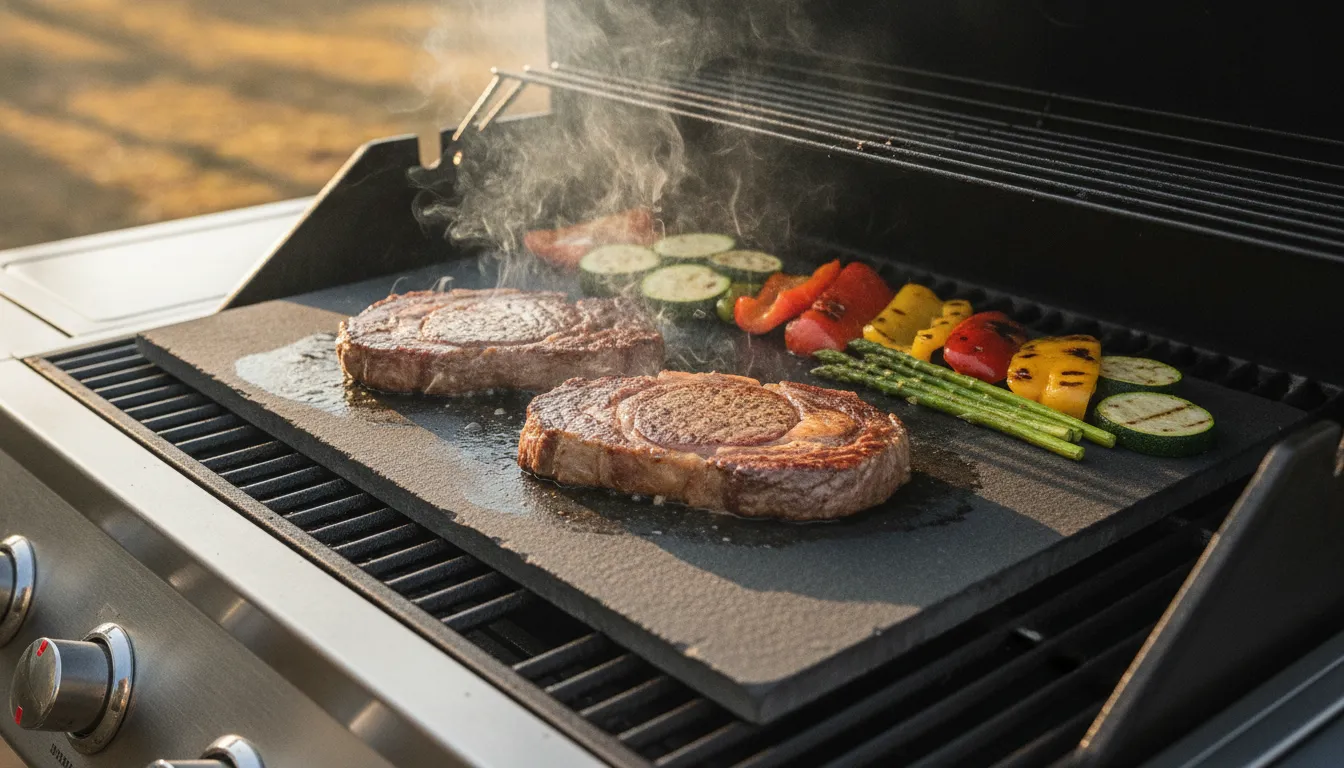
Hot pans can be placed directly on soapstone, which makes it especially practical around cooktops and food-service areas. The material is heat-resistant and resists thermal shock when it is heated and cooled gradually. Even so, normal handling remains sensible. Avoid treating any stone as indestructible, and use trivets when they are convenient, particularly for prolonged or unusually intense heat. That balanced guidance preserves the benefit without turning a performance attribute into an exaggerated promise.
The most successful specifications describe soapstone honestly: low maintenance, stain-resistant, and durable, with occasional cosmetic oiling and a patina that rewards use. That clarity helps clients appreciate a surface engineered by nature and crafted for a long service life.
How to Start a Custom Soapstone Project with a Fabrication Partner
A successful custom soapstone installation starts with a clear conversation between the design team and the fabricator. Before selecting a slab or finalizing drawings, request a free project consultation. Share the basic scope, intended use, approximate dimensions, schedule, and the level of support you need. A specialist can then advise on material selection, edge details, seams, cutouts, and the practical requirements that affect fabrication.
Define the project scope early
Begin by identifying whether the project is residential or commercial. A kitchen renovation, hospitality counter, fireplace surround, vanity, and commercial food-service surface may each require a different approach to detailing and coordination. Include the project location, finish expectations, sink or appliance cutouts, backsplash requirements, and any accessibility or high-use considerations. For commercial work, also outline anticipated traffic and cleaning routines so the fabrication partner can help assess the application.
At this stage, send drawings, renderings, or a finish schedule if available. The goal is not to have every detail resolved before the first call. It is to give the fabricator enough context to identify opportunities and constraints while design decisions are still flexible.
Review samples and select the slab
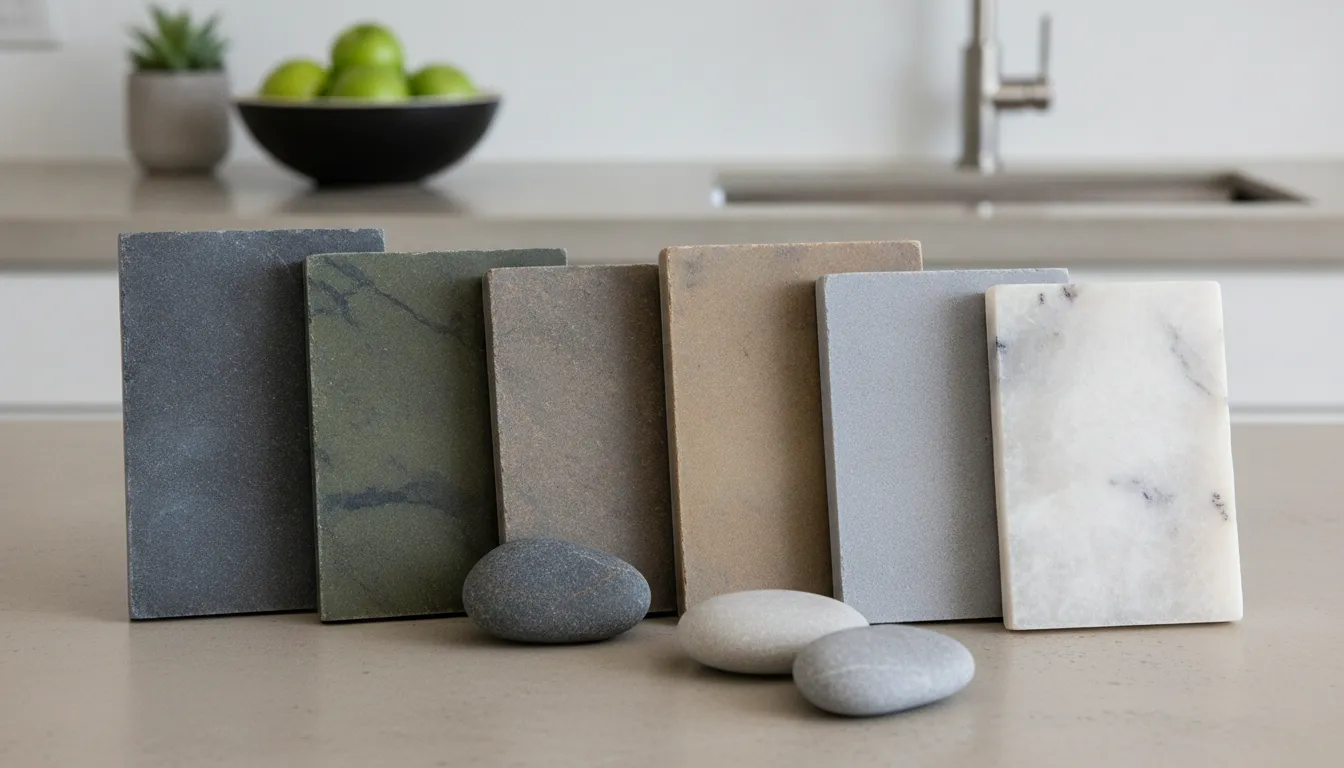
Ask to review soapstone samples and discuss how the stone's natural variation will support the design. A specialist can explain differences in tone, movement, finish, and expected patina. This is especially important when a surface must coordinate with cabinetry, millwork, tile, or other architectural materials. Confirm which sample or slab is being used as the design reference, and document the approved finish before fabrication begins.
Soapstone is sourced and fabricated as a natural material, so the final surface should be understood as an individual piece rather than a perfectly uniform manufactured product. Early slab review helps the design team make informed decisions about seam placement, focal areas, and how the stone will read across multiple surfaces.
Coordinate measure, fabrication, and installation
Once the design is sufficiently developed, confirm the measure process and the information required before cutting. Coordinate site access, templates, plumbing details, appliance specifications, and the installation window. Soapstone Pros provides installation within the Ottawa Capital Region, allowing local architects and designers to coordinate measure, fabrication, and installation through a regional specialist.
For projects outside that service area, custom-cut soapstone slabs can ship throughout North America as a fabrication-only service. The local contractor or installation team remains responsible for receiving, handling, and installing the pieces. Clarifying that distinction at the beginning keeps responsibilities, scheduling, and site coordination clear. To begin, book your free personalized quote with the project scope and drawings available.
Frequently Asked Questions
Does soapstone require sealing?
No. Soapstone is naturally non-porous, so it does not need a penetrating sealer. Mineral oil may be applied periodically to deepen the colour and support a more even patina, but this is a cosmetic care choice rather than a barrier treatment.
What is the main downside of soapstone countertops?
Soapstone is softer than many countertop stones, so edges and surfaces can develop scratches or small marks through daily use. These marks are usually repairable by sanding and can become part of the material's evolving character. A specialist fabricator can also advise on edge profiles and details that suit the intended level of use.
Can soapstone be used in a commercial kitchen or bathroom?
Yes. Its resistance to heat, stains, and moisture makes it suitable for demanding commercial applications, including food-service work areas and bathroom surfaces. Its naturally antibacterial character can also be valuable where easy-to-clean, non-porous surfaces are important. The design should still account for traffic, edges, joints, and the maintenance approach.
How long does soapstone last?
With proper care, soapstone can last more than 30 years. Its appearance typically develops over time as the surface deepens from gray toward charcoal or black, particularly with mineral-oil treatment. Gradual heating and cooling also help preserve the material by reducing thermal-shock stress.
Ready to Develop Your Custom Soapstone Project?
A thoughtful specification starts with the right material guidance, fabrication approach, and installation plan for your residential or commercial project. Soapstone Pros can help you evaluate the fit for your design, discuss project requirements, and plan the next steps with a specialist perspective. To book your free personalized quote, contact us through the project form.

Comments