
What Color Is Soapstone? A Guide to Its Natural Hues
The beautiful, moody colors of soapstone aren’t created with dyes or resins. They are a direct reflection of the stone’s geological journey, engineered by nature over millions of years. The specific mineral composition of the rock, including its talc content and the presence of other minerals like chlorite and magnesite, dictates its final appearance. This is why some slabs are a soft, pale gray while others are a deep charcoal with rich green undertones. So, when you ask "what color is soapstone?", you’re really asking about its unique history. Choosing a slab is like selecting a piece of the earth, ensuring your countertop is not just a functional surface but a genuine work of natural art.
Key Takeaways
- Soapstone's Color Comes from Nature
: Its palette ranges from light gray to deep black, often with beautiful green or blue undertones determined by the stone's unique mineral makeup, making every slab one-of-a-kind.
- Your Soapstone's Color Will Deepen
: Expect your soapstone to develop a rich patina, darkening over time as it ages. You can embrace this natural evolution or apply mineral oil to achieve a darker, more consistent look right away.
- Choose a Color That Complements Your Space
: Consider your room's lighting, cabinet colors, and flooring when selecting a slab. Lighter grays can brighten a space, while dark charcoals create a bold, grounding focal point.
What Colors Does Soapstone Come In?
When you think of soapstone, you might picture a classic, dark gray surface. While that’s a popular look, it’s only one part of the story. Soapstone’s true beauty lies in its diverse and subtle color palette, which is a direct result of its unique mineral makeup. Quarried from the earth, each slab tells a story through its color and veining. The colors range from soft, light grays to deep, dramatic blacks, often with beautiful undertones of green or blue woven in. This natural variation means you can find a slab that perfectly matches the vision for your space, whether you’re designing a bright, airy kitchen or a cozy, modern den.
Unlike manufactured materials that offer uniform patterns, soapstone provides a one-of-a-kind piece of art for your home. The talc content, along with other minerals like magnesite and chlorite, dictates the final hue and feel of the stone. This is why some slabs feel softer and appear lighter, while others are harder and darker. Understanding this range is the first step to choosing the perfect stone that not only complements your design but also reflects your personal style. From there, you can decide whether to let it age naturally or treat it with oil to deepen its color.
Light Gray and White
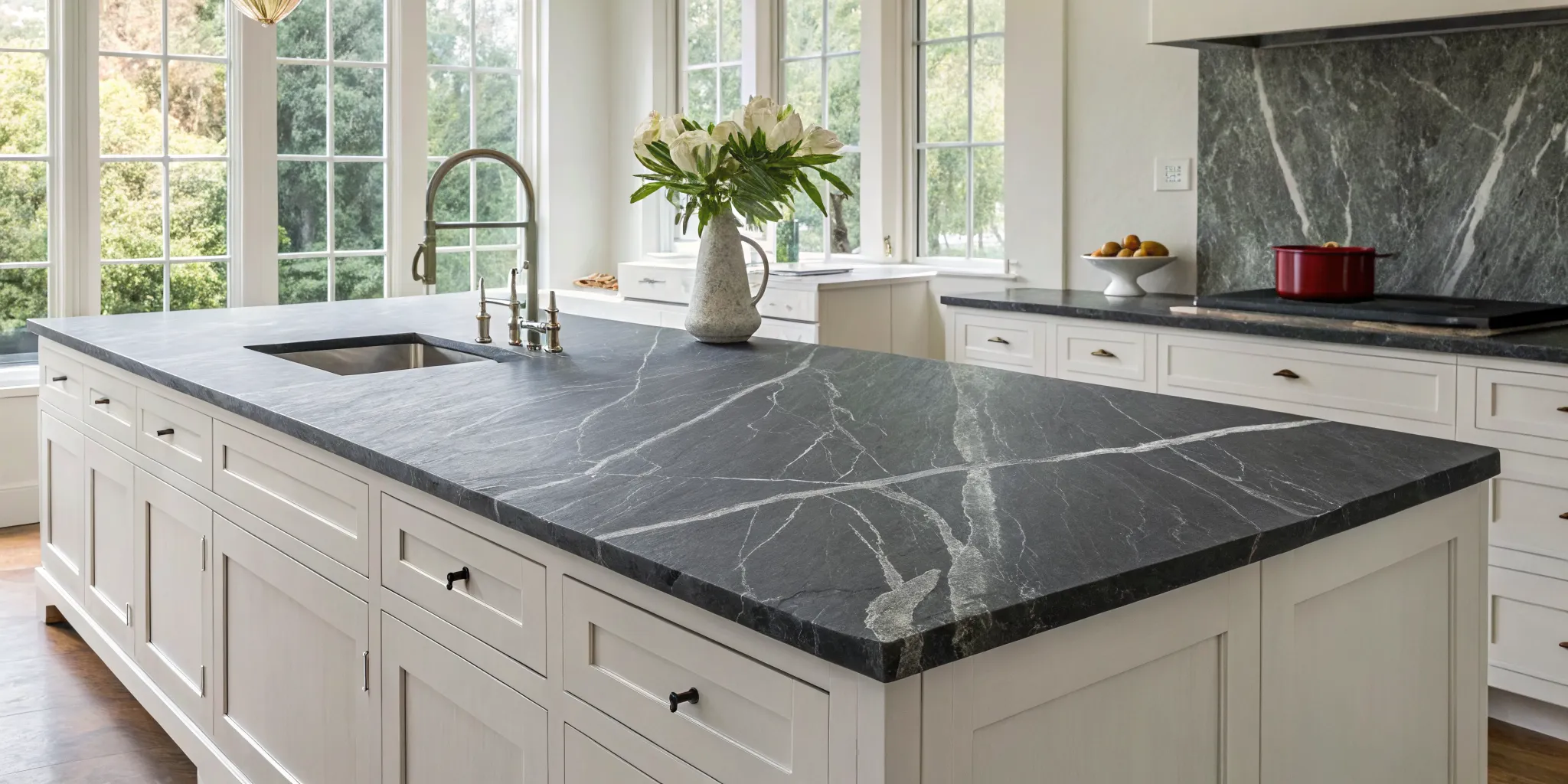
On the lighter end of the spectrum, you’ll find soapstone in beautiful shades of soft, light gray. These slabs often feature delicate, milky-white veining that swirls across the surface, creating a gentle and organic pattern. This color choice is perfect for making a room feel brighter and more spacious. The subtle, clean look of light gray soapstone provides a serene backdrop that pairs well with almost any cabinet color or design style, from rustic farmhouse to minimalist modern. We’ve seen how these lighter tones can completely transform a kitchen in our custom projects, creating a welcoming and timeless centerpiece.
Dark Gray and Charcoal
For a bolder and more dramatic statement, dark gray and charcoal soapstone are fantastic options. These deeper shades bring a sense of sophistication and depth to a room. A charcoal soapstone countertop can anchor a kitchen design, providing a striking contrast to lighter cabinets or adding a moody, elegant feel to a darker color scheme. While oiling or waxing will naturally darken any soapstone over time, many slabs are inherently a rich, dark gray right from the quarry. This classic, enduring color highlights the stone’s natural character and provides a surface that is as practical as it is beautiful.
Green and Blue-Gray
One of the most captivating aspects of soapstone is its tendency to have subtle, colorful undertones. It’s common to find slabs with hints of green, from a soft seafoam to a deep forest green, mixed in with the gray. Others might have cool, blue-gray undertones that give the stone a tranquil and earthy quality. These colors add a unique layer of complexity and are perfect for anyone wanting to connect their home’s design to natural elements. A countertop with green undertones looks incredible next to natural wood cabinets, while a blue-gray slab can complement a sleek, contemporary kitchen. These unique hues also make for a stunning Greystone in an outdoor kitchen.
Black
Classic black is the color many people associate with soapstone, and for good reason. It’s a timeless, elegant choice that delivers a powerful design statement. While some soapstone is naturally very dark, the iconic deep black color is often enhanced by applying mineral oil. This treatment darkens the stone, making the natural veining stand out and giving the surface a rich, uniform appearance. Because soapstone is non-porous, it won’t stain, making it an ideal material for a hardworking kitchen. A black soapstone countertop is a durable and beautiful choice that will develop a lovely patina over the years, adding to its unique story.
What Gives Soapstone Its Color?
The beautiful, moody colors of soapstone are not the result of dyes or artificial treatments. Instead, they are a direct reflection of the stone’s geological journey. Each slab tells a unique story through its color, veining, and texture, all determined by the specific environment where it formed millions of years ago. This natural process means that every soapstone countertop or grilling stone is a one-of-a-kind piece of art, engineered by nature itself. Understanding what creates these colors can help you appreciate the stone even more and choose the perfect slab for your home.
How Minerals Create Color
Soapstone’s signature colors, from light gray to deep charcoal with hints of green or blue, come from its unique mineral makeup. As a metamorphic rock, soapstone is formed under intense heat and pressure deep within the Earth. The stone’s final mineral composition dictates its appearance. The primary mineral is talc, but it also contains varying amounts of chlorite, magnesite, and dolomite. The presence and concentration of these other minerals create the stone’s base color and its beautiful, often dramatic, veining. For example, higher concentrations of chlorite are what introduce those lovely green undertones you can find in some slabs.
How Talc Content Affects the Shade
Talc is the mineral that gives soapstone its name and its famously soft, smooth feel. The amount of talc in a slab directly influences both its color and its texture. Generally, soapstone with a higher talc content will be lighter in color, often appearing as a soft, pale gray, and will feel softer to the touch. The natural stone selected for architectural use, like countertops, has a slightly lower talc content. This balance makes it harder and more durable for everyday kitchen activities while still retaining that classic silky texture and rich coloration that soapstone is known for.
Using Undertones to Match Your Design
Beyond the primary gray or black, most soapstone slabs have subtle undertones of green, blue, or even warm beige. These undertones are your secret weapon for creating a cohesive design. When you’re selecting your stone, pay close attention to these subtle hues. A slab with cool, blue-gray undertones can beautifully complement stainless steel appliances and a modern aesthetic. Meanwhile, a soapstone with earthy green veining might be the perfect match for natural wood cabinetry and a more traditional or rustic kitchen. Looking at our custom projects can give you great ideas for pairing these undertones with your existing finishes.
Does Soapstone Color Vary by Origin?
The short answer is yes, absolutely. Where soapstone is quarried has a huge impact on its final look. The specific geological conditions of a region, like the mineral deposits and pressure the stone formed under, create its unique color and veining. While a lot of the soapstone used for countertops today comes from Brazil, it’s also sourced from quarries in North America, India, and Finland. Each location produces stone with a distinct personality.
This is why no two soapstone slabs are ever identical. The subtle differences in mineral composition mean that a slab from a Canadian quarry will look different from one quarried in South America. This natural variation is part of what makes the material so special. It ensures that the custom projects we craft for your home are truly one-of-a-kind. When you choose soapstone, you’re not just getting a countertop; you’re getting a piece of the earth, shaped by its specific history. Understanding where your stone comes from can help you appreciate its unique story and appearance.
North American vs. Brazilian Soapstone
When you start shopping for soapstone, you’ll likely hear a lot about Brazilian soapstone, as it’s one of the most common types available. Brazilian soapstone is often known for its harder composition and darker, more dramatic appearance, sometimes featuring bold, contrasting veins. It’s a beautiful choice if you’re looking for a high-impact statement piece in your kitchen or bathroom.
In contrast, North American soapstone, including varieties from Canada, typically presents a softer, more classic look. It often has a lighter gray base with delicate, subtle veining that creates a gentle sense of movement. Many homeowners choose soapstone from North America for its understated elegance and timeless appeal, which complements a wide range of design styles from traditional to modern farmhouse.
Common Colors by Region
While every quarry produces unique slabs, you can find some general color trends based on origin. Soapstone’s color palette generally ranges from light, silvery gray to deep charcoal and black. Many slabs also feature beautiful undertones of green or blue, which can add an unexpected layer of complexity to your design. For example, some regions are known for producing soapstone with a distinct, earthy green hue that pairs wonderfully with natural wood tones.
Ultimately, the best way to understand these regional differences is to see the stone for yourself. The color and character of a slab can even vary within a single quarry. This is why we love working with materials like our Greystone, which showcases the stone’s natural durability and beauty. Exploring different slabs in person allows you to find the exact shade and pattern that speaks to you.
How Does Soapstone's Color Change Over Time?
One of the most captivating qualities of soapstone is that it’s a living material. Unlike other stones that remain static, soapstone evolves with your home, developing a unique character over the years. Its color will deepen and grow richer, telling the story of the meals prepared and the memories made around it. This transformation isn't a flaw; it's the hallmark of authentic, natural stone.
This change happens through a natural aging process, but you also have a hand in guiding its appearance. You can choose to let the stone darken on its own timeline, or you can accelerate and even out the process with mineral oil or a special wax. Whether you’re installing a new countertop or using one of our Greystone grilling stones, understanding how its color will mature helps you appreciate its journey. This evolution is what makes soapstone a truly personal and timeless choice for any home. It’s a dynamic surface that responds to its environment, which is a rare and beautiful trait in a natural material. The initial color you choose is just the beginning of its story. As it ages, it gains a depth and complexity that manufactured materials simply can't replicate. This is why so many people fall in love with soapstone; it becomes a part of their home's history.
How Soapstone Develops a Natural Patina
Over time, your soapstone will naturally develop what’s called a patina. This is simply the result of the stone oxidizing as it's exposed to air and daily life, causing its surface to gradually darken. A light gray countertop might slowly shift into a deeper, richer charcoal. This process is completely organic and adds a depth of character that makes your surface one-of-a-kind.
Think of it as the stone settling into your home. Every spill and touch contributes to its story, creating subtle variations in tone. This graceful aging is something to be embraced, as the developing patina ensures that no two soapstone countertops will ever look exactly alike. It’s a beautiful, slow transformation that adds warmth and history to your space.
How Oiling and Waxing Darken the Stone
If you love the look of dark, dramatic soapstone and don’t want to wait for the natural patina to develop, you can take matters into your own hands. Applying a food-safe mineral oil or soapstone wax will instantly deepen the stone’s color. A soft, light gray slab will transform into a striking charcoal or black, making the stone’s natural veining pop with incredible contrast.
This is a fantastic way to achieve a consistent, uniform look from day one. Oiling brings out the hidden complexities and beautiful varieties within the stone that might otherwise take years to appear. The choice is entirely yours: let it age naturally or apply oil for immediate depth. Many of our custom projects showcase this stunning transformation, giving you a clear idea of the possibilities.
How Often Should You Oil Your Soapstone?
There’s no strict schedule for oiling your soapstone. The frequency really depends on the specific porosity of your slab and the look you want to maintain. A good starting point for a new countertop is to apply oil about once a month for the first year. Some stones will be fully saturated after just a few months, while others might take a bit longer.
The best way to know when it’s time to reapply is a simple water test. As a general guide for caring for soapstone, if you notice that water splashes are leaving dark spots, it’s a sign the stone is ready for another coat of oil. Over time, you’ll find you need to oil it less and less, eventually only needing a touch-up once or twice a year.
How to Choose the Right Soapstone Color
Choosing the right soapstone color is one of the most exciting parts of designing your space. Since every slab is unique, you’re not just picking a color; you’re selecting a one-of-a-kind piece of art from nature. The perfect hue will tie your entire room together, reflecting your personal style and creating the atmosphere you’ve always wanted. Think of it less as a technical decision and more as a creative one.
To find the best fit, you’ll want to consider a few key elements of your home. The lighting in your room, the size of the space, and your existing finishes all play a role in how the soapstone will look and feel. Whether you’re aiming for a bright and airy kitchen or a dramatic, cozy den, there’s a soapstone color that will help you achieve it. We’ll walk through how to balance these factors to make a choice you’ll love for years to come.
Consider Your Room's Lighting and Size
The light in your room has a huge impact on how a soapstone color will appear. A room with lots of natural light can handle a darker, more dramatic soapstone without feeling heavy. In fact, a deep charcoal or black can create a stunning contrast in a bright space. On the other hand, if your room is smaller or has limited natural light, a lighter gray soapstone can make the space feel brighter and more open. Before you decide, take note of how the light changes in your room throughout the day. This will help you visualize how your new countertops will look from morning to night.
Light vs. Dark Soapstone: Which Is Best for You?
Soapstone’s color palette ranges from soft, light grays to rich, dark charcoals and even near-blacks. Some slabs feature beautiful, subtle undertones of green or blue. The choice between light and dark often comes down to the mood you want to create. Lighter grays offer a soft, serene, and airy feel, while darker tones provide drama, depth, and a grounding presence. There’s no right or wrong answer; it’s about what speaks to you. Viewing a gallery of custom projects can help you see how different colors look in finished kitchens and bathrooms, making it easier to find your preference.
Match Soapstone with Your Cabinets and Floors
Your new soapstone countertops should feel like a natural part of your home, so it’s important to consider your existing finishes. For a seamless, cohesive look, match the undertones of the soapstone to your cabinets and flooring. For example, a light gray soapstone with faint veining pairs beautifully with classic white cabinets for a clean, modern aesthetic. If you have warm wood cabinets, a soapstone with earthy green undertones can create a rich, organic feel. We always recommend bringing a sample of your cabinet door and flooring when you view slabs to see how the colors interact in person.
Use Cool Tones for a Modern Look
While many people think of soapstone as simply gray, its cool undertones offer a fantastic way to add subtle color to your design. Slabs with hints of green or blue-gray can introduce a fresh, natural element to your space. A soapstone with a distinct green hue is perfect for rustic or farmhouse-style homes, giving the room an earthy, lived-in feel. Meanwhile, a blue-gray soapstone can create a sophisticated and contemporary look, especially when paired with sleek, minimalist cabinetry and stainless steel appliances. These cool tones are a great way to make a statement without overwhelming your design.
Pair Earthy Hues with Wood and Stone
Soapstone’s organic, matte finish makes it a perfect partner for other natural materials. Its earthy hues complement the warmth of wood and the texture of other stones, creating a design that feels balanced and timeless. Imagine a dark charcoal soapstone countertop against warm oak cabinets or a light gray slab paired with a stacked stone backsplash. This natural versatility is also why soapstone is an excellent choice for outdoor kitchens. A durable Greystone can tie together an outdoor space that features wood decking, stone patios, and lush greenery, proving its ability to harmonize with nature.
Popular Colors for Soapstone Countertops and Grilling Stones
Soapstone’s beauty lies in its subtle, natural variations. While you won’t find bright, flashy colors, you will discover a rich palette of deep, earthy tones that bring a sense of warmth and history to any space. From soft grays to dramatic blacks with hints of green, the most popular colors are timeless choices for both countertops and grilling stones. Each slab is unique, with its own veining and mineral deposits, so you’re always getting a one-of-a-kind piece. Let’s look at some of the most sought-after hues.
Classic Gray
If you love a look that is both versatile and timeless, classic gray soapstone is a perfect choice. In its natural state, this stone has a soft, light gray color that feels calm and inviting. It’s a fantastic neutral that pairs well with almost any cabinet color or design style, from traditional to contemporary. Over time, or with a bit of mineral oil, the light gray will deepen into a more uniform, medium-to-dark gray, and its subtle white or quartz veins will become more pronounced. This beautiful evolution is part of what makes soapstone so special in custom home projects.
Dramatic Charcoal and Black
For a bolder, more contemporary statement, consider a darker soapstone in shades of charcoal or black. These deep tones create a striking contrast, especially against light-colored cabinetry, and lend a sophisticated, modern feel to a kitchen. A charcoal slab often has beautiful, flowing veins that add movement and character. With regular oiling, these darker stones will transform into a deep, matte black that is incredibly elegant and grounding. This dramatic look is a favorite in kitchens that aim for a sleek and high-contrast design.
Earthy Green Tones
Many soapstone varieties have a beautiful green undertone, ranging from a subtle, grayish-green to a more pronounced, earthy hue. This color variation comes from the specific mineral content in the stone and adds a unique, organic touch to your space. Green-toned soapstone is a wonderful match for rustic, farmhouse, or nature-inspired designs, pairing beautifully with natural wood finishes and warm metal accents like brass or copper. The green often becomes richer and more apparent after oiling, giving your countertops a deep, forest-like quality that feels both grounding and luxurious.
The Best Color for Grilling Stones
When it comes to performance, any color of soapstone makes an excellent grilling stone. The stone’s incredible ability to absorb, retain, and radiate heat evenly is a natural property, regardless of its shade. Our rectangular grilling stones are typically a shade of gray that will naturally darken with use. As you cook, the heat and oils from your food will season the stone, creating a nonstick patina and turning it a deep, rich black over time. This color change is a sign of a well-loved and well-used grilling stone that’s ready for its next culinary adventure.
How Your Color Choice Affects Maintenance
Choosing a soapstone color isn't just about the initial look; it's about embracing how the stone will live and change in your home. Unlike manufactured materials, soapstone has a dynamic quality, and its color will evolve with use. Understanding this process from the start helps you select the perfect stone and know what to expect, ensuring you’ll love your soapstone for years to come. The maintenance involved is less about preventing change and more about guiding its beautiful, natural transformation.
Expect Your Stone's Color to Evolve
One of soapstone's most cherished qualities is its ability to develop a patina. Over time, soapstone naturally darkens from a light gray to a rich, deep charcoal or black. This aging process adds incredible depth and character, telling the story of your home and the life lived around it. Think of it as a living finish that only gets better with age. This evolution is a feature, not a flaw. Whether you choose to let it darken naturally or speed up the process with oil, the resulting patina gives your countertops a timeless, rustic elegance that is completely unique to your space.
Countertops vs. Grilling Stones: Different Color Needs
How you use your soapstone will influence how its color changes. For countertops, exposure to oils and daily use will cause a gradual darkening. You can control this by applying mineral oil for a more uniform, deep color. However, a soapstone Greystone tells a different story. Because it’s exposed to high heat and cooking oils, a grilling stone will darken significantly and quickly. This "seasoning" process is completely normal and even desirable, as it enhances the stone's nonstick properties and durability. The dark, seasoned surface is a sign of a well-loved and well-used cooking tool.
How to Ensure Color Consistency Across Slabs
Since soapstone is a natural material, no two slabs are exactly alike. Each piece has its own unique veining, mineral deposits, and color variations. For large projects requiring multiple slabs, like a spacious kitchen island or wraparound counters, achieving a cohesive look is key. We recommend viewing the full slabs in person before making a final decision. A professional can help you select slabs from the same block and orient them to create a seamless flow. This careful planning is a crucial part of our process for custom projects, ensuring the final installation is a stunning, unified work of art.
Find Your Perfect Soapstone Color
Choosing the right soapstone color is one of the most exciting parts of designing your space. Because soapstone is a natural material, you won’t find it in artificial, flashy colors. Instead, its beauty lies in its organic, earthy palette. Most slabs range from a soft, light gray to a deep, dramatic charcoal, often with beautiful undertones of green or blue. The mineral composition gives each piece its own unique character, with delicate veining and subtle flecks that tell a story. No two slabs are ever exactly alike, which means your countertop or feature wall will be truly one-of-a-kind.
So, how do you pick the perfect one? Start by thinking about the atmosphere you want to create. A light, silvery gray soapstone can make a room feel open and serene, while a dark charcoal or black slab creates a bold, sophisticated statement. Consider how the stone will pair with your cabinets, flooring, and the amount of natural light in the room. We always recommend viewing full slabs when possible, as the subtle patterns and undertones are what truly bring the stone to life. Looking at examples of custom projects can also help you visualize how different colors work in a finished space.
Beyond the main color, pay attention to the veining. Some slabs have quiet, minimal veining, while others feature bold, dynamic lines that add a lot of movement. These details can help you match the stone to your design style, whether it's rustic, modern, or traditional. If you're weighing your options, it can be helpful to read about the experiences of others. Homeowners often share great insights on what it's like to live with different types of soapstone and can offer practical pros and cons to guide your decision.
Related Articles
Frequently Asked Questions
Will my light gray soapstone stay that color forever? No, and that’s one of its most beautiful qualities. Soapstone naturally darkens over time as it is exposed to air, a process that creates a patina. Your light gray countertop will gradually deepen into a richer, darker gray or charcoal. This slow, organic change adds a unique character and warmth to your space, making the stone truly your own.
Do I have to oil my soapstone countertops? You don't have to; it's completely a matter of preference. If you love the look of the stone as it ages naturally, you can simply let it be. Oiling just speeds up the darkening process and gives the stone a more uniform, deep color right away. It also makes the natural veining stand out. If you choose not to oil, the patina will develop more gradually and may appear less even at first, which is a look many people love.
Is black soapstone naturally black, or is it dyed? Soapstone is never dyed; its color is entirely natural. While some slabs are quarried as a very dark charcoal, the iconic, deep black color is usually achieved by applying mineral oil. The oil saturates the stone, enhancing its natural dark tones and creating that classic, uniform black appearance. Without oil, even the darkest soapstone will typically look more like a dark gray.
Why does some soapstone have green or blue undertones? Those beautiful, subtle colors come from the stone's unique mineral makeup. Soapstone is primarily made of talc, but it also contains other minerals like chlorite and magnesite. The presence of chlorite, for example, is what gives some slabs those lovely green hues. These undertones are a direct result of the specific geological conditions where the stone was formed millions of years ago.
How can I make sure my soapstone color matches my kitchen cabinets? The best way to ensure a perfect match is to consider the undertones. Bring a sample of your cabinet door and flooring with you when you go to view slabs in person. Hold them right up to the stone to see how the colors interact. A soapstone with cool, blue-gray undertones might pair beautifully with white or gray cabinets, while a slab with earthy green veining can look incredible next to natural wood.



Comments