
Greystone Grilling Stone vs. a Standard Grill Grate
Choosing between a Greystone grilling stone vs. a standard grill grate comes down to the way you want heat to meet food. A grate exposes food to the grill below, while a solid soapstone surface creates a broad cooking area between the food and the open flame. For a restaurant, bar, caterer, or serious backyard cook considering a grilling stone, the useful question is not which surface is universally better. It is which one fits the menu, pace, equipment, and workflow.
Greystone Grilling Stone vs. Standard Grill Grate: What Is the Difference?
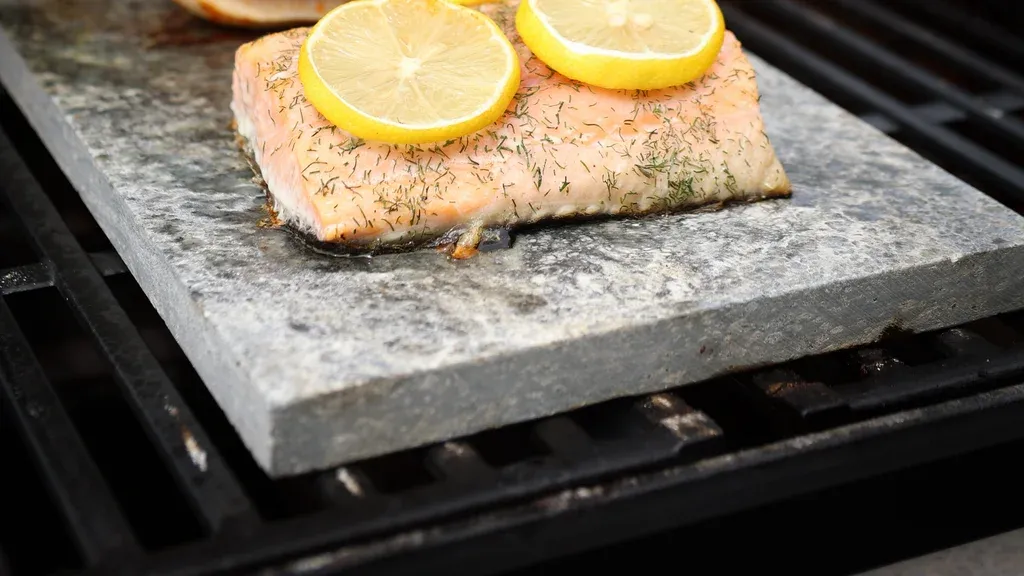
A standard grate is an open framework. Heat reaches food through the spaces between its bars, and food sits directly above the heat source. A soapstone grilling stone is a solid slab set on a grill. It absorbs heat as it preheats, then provides a continuous surface for cooking. The Greystone is a 16-by-8-by-0.75-inch soapstone grilling stone. On a standard grill, it takes about 20 to 30 minutes to preheat.
That construction changes the cooking experience. With a grate, food contacts metal bars and the spaces leave room for dripping fat to fall toward the flame. With a stone, food contacts the heated surface across more of its underside, and the stone helps keep dripping fat from falling directly through to the flame. Greystone is designed to help prevent flare-ups. Neither design makes every grill session identical: heat level, food, placement, and timing still matter.
The difference is also practical, not just material. A grate is normally the grill’s default cooking surface. A stone is an additional surface that needs space, preheating time, and a place to cool after cooking. In exchange, it offers a solid cooking zone that can suit certain foods and service styles particularly well.
A South Coast Air Quality Management District draft describes a grill as holding food while exposing it to radiant heat. That basic description helps explain why the two surfaces behave differently: the open grate leaves food more directly exposed to the heat below, while a solid stone is itself a heated cooking surface.
How do the cooking surfaces compare?
The best comparison looks at what the surface does well and the trade-offs it brings. A stone is not a replacement for every grate function, and a grate is not the only way to cook over a barbecue. Many cooks will find that the surfaces serve different jobs and can complement each other when the grill has enough room.
Consideration | Standard grill grate | Greystone soapstone grilling stone |
Cooking surface | Open bars with spaces between them | Solid soapstone surface, 16 × 8 × 0.75 inches |
Heat preparation | Uses the grill’s grate and normal heat-up routine | Requires a gradual preheat; about 20–30 minutes on a standard grill |
Food contact | Food rests on grate bars | Food rests on the heated stone surface |
Fat and flame | Drippings can fall through the open spaces toward the flame | The solid surface helps keep drippings from falling directly through and is designed to help prevent flare-ups |
Cooking area | Uses the grate area available on the grill | Provides a defined, smaller solid zone; the remaining grate may still be used if space permits |
Best fit | Direct grilling across an open surface and cooking larger quantities across the grate | Cooking on a steady solid surface when the menu or food benefits from that contact |
Workflow | Ready as part of the grill once the grill is prepared | Plan for placement, preheating, careful handling, and cooling |
This table describes general differences, not a promise of a particular cooking result. A stone does not remove the need to manage grill heat or check food as it cooks. Likewise, an open grate does not prevent a cook from controlling flame and placement. The surface changes the process; it does not take the cook out of it.
What does a solid surface change during grilling?
The most visible change is contact. Food on an open grate touches the bars, with open gaps between each bar. Food on a stone rests on a continuous heated surface. This can be useful when a cook wants a more even contact area or wants to reduce direct exposure to drippings falling into the flame. It also changes how food is moved: a spatula or tongs work across a flat surface rather than lifting food around grate bars.
Soapstone also takes time to heat. A standard grate is not a separate slab that needs its own preheat period. Greystone, by contrast, should be given its stated 20-to-30-minute preheat on a standard grill. The planning difference matters in a commercial-style setting. If a team turns on the grill only when an order arrives, a stone may not suit that service pattern. If the cooking session is planned and the stone can be heated in advance, that wait can be built into setup.
Do not treat the preheat estimate as a precise temperature reading. Grill designs and operating conditions differ. Follow the product guidance and the grill maker’s instructions, allow gradual heating, and make decisions based on the actual grill and cooking process. Avoid a sudden temperature change; soapstone resists thermal shock when heated and cooled gradually, not when treated as indestructible.
The solid surface can also affect cleanup. There are no gaps in the stone for small food pieces to fall through, but cooking residue still needs to be removed after use. Let the stone cool, then clean it in line with the product instructions. Do not assume that a natural stone needs no care simply because it is durable. For general soapstone cleaning principles, see our step-by-step guide to cleaning soapstone.
Which surface makes sense for a bar or restaurant?
A commercial setting adds questions that a home cook may not face. How many orders need to be ready at once? Can the grill be prepared before service? Does the menu call for food cooked directly over the grate, or would a solid surface have a distinct role? Can staff manage an additional hot surface safely and consistently? A product description alone cannot answer these questions for every kitchen.
Greystone’s 16-by-8-inch surface is a defined cooking zone, not a full replacement for a large grill grate. That distinction is important for throughput. A business should compare the stone’s usable surface with the volume and size of the foods it intends to cook, then consider whether the remaining grill area can continue serving other needs. Do not assume a single stone will increase output or suit a particular service volume without testing the actual setup.
For a restaurant, a useful first step is a menu and workflow review. List the foods you want to cook on the stone, the approximate number of portions in a service period, and the timing of grill setup. Then consider:
- Order timing:
Is there enough time to preheat the stone before the first order that needs it?
- Surface capacity:
Does the defined 16-by-8-inch area fit the portion sizes and batch size you have in mind?
- Other grill tasks:
Will the stone occupy space needed for direct grilling, or can both surfaces be used at the same time?
- Staff routine:
Can the team follow a consistent process for gradual heating, cooking, cooling, and cleaning?
- Equipment fit:
Does the particular grill have a suitable stable position for the stone, following both product and grill instructions?
- Trial before adoption:
Can the team test the surface during a controlled cooking session before changing a menu or service routine?
These questions are more useful than assuming that a material label guarantees commercial suitability. Greystone is a grilling stone intended for barbecue use. The decision to incorporate it into a business workflow belongs to the operator, who must evaluate the specific grill, handling procedures, food-safety requirements, and applicable local rules. Soapstone Pros does not make a universal claim that the stone is certified for every commercial kitchen or every grill.
For a bar with a focused menu or a caterer working in planned batches, a solid surface may be worth evaluating as one part of the grill setup. For a high-volume kitchen that depends on a large open grilling area and rapid order turnover, retaining the grate as the primary surface may be the more practical choice. A small trial can show whether the stone adds a useful cooking option without disrupting the operation.
When is a standard grill grate the better fit?
A grate is a straightforward choice when the job calls for an open grill surface, when the grill’s full area is needed, or when a cook wants to work directly with the grill’s existing setup. It avoids the separate stone preheating step and does not take up a section of grate with an accessory. For a busy operation that depends on rapid setup or broad cooking capacity, those practical benefits can matter more than having a solid surface.
The grate may also be the better starting point for a team learning a new barbecue workflow. Staff already familiar with their grill can use its established routines while determining whether a supplemental surface would solve a real menu problem. If the current surface is delivering the results and service pace the kitchen needs, there is no need to add equipment simply because it is available.
Open grates also suit cooks who want direct contact with the grill bars and the cooking pattern that comes with them. A stone creates a different kind of contact, so the result will not be identical. The right choice depends on the food, the desired texture, and the cook’s preferred method, not on a single blanket rule.
When might a grilling stone be worth considering?
A stone may be a useful option when a cook wants a broad, solid contact surface, or when reducing the path for drippings to fall through the cooking area is a priority. Greystone is specifically designed to help prevent flare-ups. That is a helpful design purpose, but it should not be read as a guarantee that flare-ups can never occur. Grill conditions vary, and careful cooking remains important.
The Greystone product information also describes the stone as having no forever chemicals. For shoppers who place importance on cooking-surface material, that may be part of the evaluation. Keep the claim tied to the product and avoid extending it into unrelated promises about health outcomes, regulatory certification, or all products made of soapstone.
Consider the stone as a complement to the grate rather than as a universal substitute. A grill with adequate space may let the cook reserve one area for the stone and another for open-grate cooking. That approach can preserve the grate’s flexibility while adding a solid zone. Check the grill’s size, clearances, support, and the instructions for both products before placing a stone on it.
How can cooks compare the two surfaces fairly?
When a cook wants to compare results, begin by choosing one food and one clearly stated question. For example: does the solid surface make a particular step easier to manage, or does the grate better fit the desired cooking method? Keep the question practical and avoid trying to prove a broad claim about every meal. The different surfaces naturally create different contact conditions, so an identical-looking result is not the only useful measure.
Write down the details that might affect the comparison: where the food sits, when the stone was preheated, how the grill was set up, and how much of the grill was in use. Note whether staff could keep the cooking task moving and whether the stone required extra coordination. These observations are especially useful for a business, where the whole service process matters along with the food itself.
Use the comparison to make a decision about a role, not to rank materials in the abstract. The stone might be a sensible option for one defined task while the open grate remains preferable for another. It is also reasonable to conclude that the existing grate already meets the need. That conclusion avoids adding a surface that takes preparation, space, and care without solving a meaningful problem.
For a fuller overview of barbecue stone use and setup considerations, read BBQ Stone 101: The Ultimate Grilling Guide and our Grilling Stone 101 guide. The product page for Greystone is the place to review the stone itself and follow its current purchase route.
How should a business test the stone before adopting it?
A short, planned trial can answer practical questions without making a large menu or equipment change. Test on the actual grill, with staff who would use the surface, and with a small selection of representative foods. Follow the product and grill instructions throughout. The point is not to prove that one surface is best in all conditions; it is to see whether this particular setup supports the way the business cooks.
- Choose a clear use case.
Identify one cooking task where a solid surface might help. Avoid testing several unrelated menu items at once, which makes observations harder to compare.
- Plan the preheat.
Include the stated 20-to-30-minute preheat on a standard grill in the setup schedule. Heat gradually and do not rush the process.
- Keep the comparison fair.
If comparing the stone and grate, use the same grill session where feasible and note differences in placement, heat conditions, and timing. Do not assume the two surfaces receive identical heat merely because they are on the same grill.
- Observe the workflow.
Record how the stone fits the available space, whether staff can move food comfortably, and whether the preheat and cooling periods fit the workday.
- Evaluate the result and handling.
Consider whether the surface served the intended cooking purpose and whether staff could use, cool, and clean it according to instructions.
- Decide based on the trial.
Keep it as a supplemental tool only if the benefits in the real setup justify the added steps and occupied grill space.
During the trial, do not try to force an answer by overloading the stone or changing several variables at once. Keep the operation controlled and follow the manufacturer’s directions. For workplace use, the operator remains responsible for staff procedures and for meeting food-safety and equipment requirements that apply to that operation.
How does the surface fit into a real service workflow?
Thinking through a service from opening preparation to close can expose practical issues that are easy to miss when comparing surfaces on paper. A grate is already part of the grill, so a cook can prepare the grill and use its cooking area according to the kitchen’s normal routine. Adding a stone creates a sequence: position it as directed, allow it to preheat gradually, use it for the intended task, let it cool, then clean and store or leave it in place as the instructions allow. Each stage requires time and a clear responsibility.
For a planned event or a restaurant with a predictable grill schedule, that sequence may be manageable. The team can build the preheating period into setup and decide when the stone is needed. For an unpredictable rush, the same time requirement may be inconvenient. A cook should not try to compensate by rushing heat-up or making an unsafe handling choice. If the operation cannot accommodate the preparation step, the grate may be the more dependable default for that use.
Space matters during service too. Measure not only whether the stone physically fits, but also whether staff can access the cooking area and move food without crowding the other grill tasks. Think through where utensils will be placed, how the cook will distinguish the stone zone from open grate space, and how a hot stone will be managed when the cooking task ends. The grill’s available area is shared working space; the stone occupies some of it even when no food is on the surface.
Food choice should be specific rather than broad. Ask what menu item or cooking step would benefit from continuous contact with a heated surface, then test that task. If the answer is simply “everything,” the team may be expecting one accessory to solve too many different cooking needs. A grate and a stone provide different contact patterns, and the cook should choose for the dish and process at hand. Use the trial to discover whether the solid surface fills a real gap, not to prove that it is automatically superior.
Commercial teams may also have multiple cooks using the same station. If so, write down the intended setup and handling sequence in plain language and make sure every staff member who uses it understands the process. Do not assume that one person’s successful test establishes a repeatable procedure for everyone. Consistent setup, heat management, safe handling, cooling, and cleaning are part of determining whether an additional surface works in a shared kitchen.
After a test session, note a few observable points: how long preparation took, how much of the grill was occupied, whether the stone was easy to incorporate into the cook’s movement, and whether the cleanup and cooling steps fit the shift. Record what was tested and under what conditions. These notes help distinguish a useful benefit from an impression formed during a single busy moment. They also make it easier to decide whether to repeat the trial, change the setup, or continue using the grate alone.
What should you check before buying?
Before choosing Greystone for a commercial-style or home barbecue setup, use this checklist:
- Measure the available space.
Compare the grill’s usable surface with the stone’s 16-by-8-inch footprint, while leaving the arrangement consistent with the grill and product directions.
- Plan for preheating.
The stone takes about 20 to 30 minutes to preheat on a standard grill. Decide whether that timing fits your service or cooking routine.
- Decide what the stone will do.
Choose a specific food or cooking situation for which you want a solid surface. Do not expect it to replace every function of the grate.
- Consider capacity.
Work out how many portions can fit with room to handle them. Treat the surface size as a planning constraint, not a throughput promise.
- Check the heat source and setup.
Greystone is intended for grilling and barbecue. Confirm that the exact grill and placement are appropriate by following the relevant instructions.
- Prepare a handling routine.
Plan who will place, monitor, and clean the stone, and where it can cool safely after cooking.
Review the current product details.
Use the
for information about the grilling stone and its Amazon purchase links for Canada or the United States.
For commercial buyers, also confirm internal approval before putting any new cooking equipment or accessory into service. This article is a product comparison, not a certification, equipment-fit determination, or substitute for workplace procedures.
Frequently Asked Questions
Does Greystone replace a standard grill grate?
No. Greystone provides a solid cooking zone, but its 16-by-8-inch surface is not the same as a full open grate. Some cooks may use it alongside part of a grate when the grill has suitable space and the setup follows the product and grill instructions.
How long does the stone take to preheat?
Greystone takes about 20 to 30 minutes to preheat on a standard grill. Allow gradual heating and follow the product instructions. The actual grill and operating conditions can affect the process, so do not treat the estimate as a guaranteed temperature or timing for every setup.
Does the stone eliminate flare-ups?
No surface can promise that flare-ups will never happen. Greystone is designed to help prevent flare-ups, and its solid surface helps keep dripping fat from falling directly through to the flame. Continue to manage grill heat and food carefully.
Is Greystone suitable for every restaurant or bar?
There is no universal answer. A business should evaluate its grill, menu, service pace, available surface, staff handling routine, and applicable requirements. The stone’s stated size and preheat time are useful planning details, but they do not establish suitability for every commercial operation.
Where can Canadian buyers find Greystone?
Greystone grilling stones are sold through Amazon in Canada and the United States. Visit the Greystone page to review the product information and follow the available purchase option for your market.
The practical choice is the surface that fits your food, grill, and pace: use the grate for an open, flexible cooking area, and consider Greystone when a planned solid soapstone surface adds a specific benefit to the way you barbecue.


Comments